

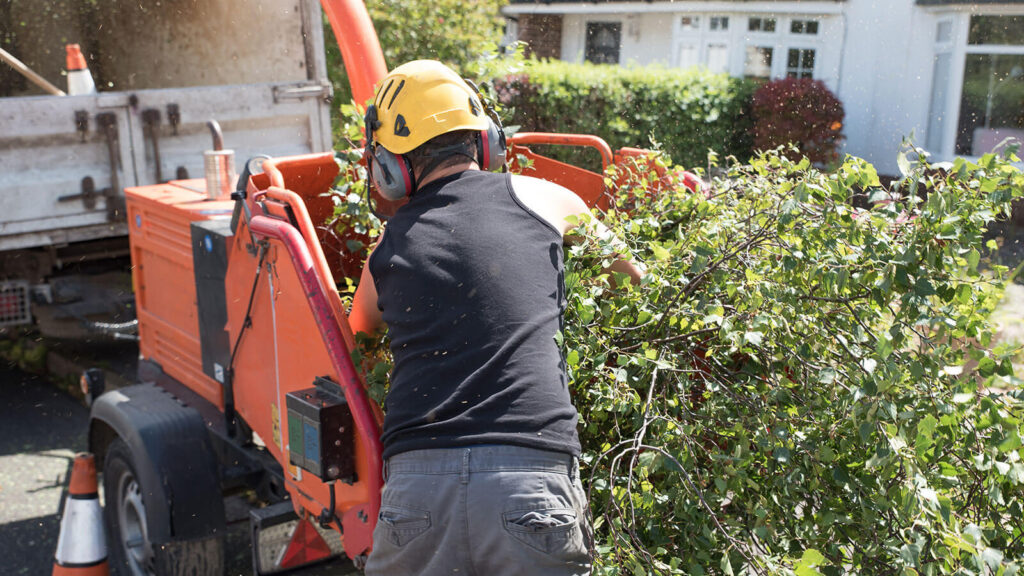
By early spring, a lot of Putnam County yards look a little rough around the edges. That is not unusual. Between heavy snow, freeze-thaw cycles, wet wind, and the occasional ice load that lingers longer than anyone wants, trees often come out of winter looking tired. Branches that seemed fine in January suddenly hang low in April. Bark splits show up. Dead twigs stay stuck in the canopy. And the cleanup many homeowners put off until the weather turns is usually more than a quick rake-and-go job.
Spring tree cleanup in Putnam County is less about making the property look neat and more about catching winter damage before it turns into a bigger headache. In a lot of Hudson Valley homes, especially older colonials, ranches, and split-levels with mature trees close to the house, the real concern is not just appearance. It is what is cracked, what is leaning, what is dead, and what could fall in the next wind event.
What spring tree cleanup usually means after a Hudson Valley winter
Homeowners sometimes think of tree cleanup as one single task. In practice, it is a mix of light pruning, hazard checking, debris removal, and a close look at what winter left behind. In Putnam County, that often includes trees near driveways, roofs, pools, fences, and power service lines.
A proper cleanup usually focuses on the following:
- Removing broken or hanging limbs
- Cutting back dead branches that did not survive winter
- Clearing branches or brush from roofs, gutters, and walkways
- Checking for split trunks or stressed limbs
- Watching for trees that started leaning after saturated soil or ice load
Many homeowners assume the tree will “bounce back” once spring arrives. Sometimes it does. Sometimes the damage is already done, and the tree is just holding together long enough to make trouble later.
If you are already comparing options for spring tree cleanup help in Putnam County, it usually makes sense to look at the whole property, not just the trees that are easiest to see from the front yard.
What to remove first: the obvious hazards
Start with anything that could fall on a person, vehicle, roof, or utility line. That sounds simple, but after winter debris settles in, homeowners often get used to looking past the problem. The branch that has been hanging at shoulder height for three weeks becomes part of the scenery.
Remove broken and hanging limbs
These are the first priority. If a limb is cracked but still attached, it can come down with very little warning. That is especially true after windy spring weather or a sudden rainstorm.
Clear deadwood near the house
Dead branches are common after harsh winters, especially on older maples, oaks, and ornamental trees that already had some stress going into the season. Deadwood is brittle, so it does not need much wind to become a problem.
Watch anything touching the roof or gutters
Branches that rub against shingles or deposit debris into gutters can create a chain reaction. A branch that seems minor can lead to clogged drainage, ice-damaged edges, or repeated wet spots along the roofline. If your cleanup reveals gutters blocked by winter branches and debris, it is worth dealing with that sooner rather than later.
What to trim, and what to leave alone
This is where homeowners often overdo it. Spring pruning is useful, but aggressive cutting is where a routine cleanup can turn into a tree stress problem. A lot depends on the type of tree, how it weathered the winter, and where it sits on the property.
Good candidates for spring trimming
- Small dead twigs and branches
- Crossing limbs that are rubbing against each other
- Lower branches hanging over walkways or driveways
- Suckers and unwanted shoots near the base of some trees
- Light shaping on ornamental trees after visible winter damage
Leave structural pruning to a pro when the tree is large
If the tree is close to the roof, over a fence, or near service lines, there is a point where DIY pruning stops being smart. That is especially true in neighborhoods with mature shade trees and older homes where branch clearance was already tight before winter. A small mistake can mean a damaged roof edge, a broken fence panel, or worse.
It also helps to avoid removing too much live growth at once. Trees already stressed by winter, road salt, compacted soil, or recent construction do not always respond well to heavy spring cutting.
What to watch for after winter damage
Some tree problems are obvious. Others are subtle enough that people miss them until the next storm. One thing that catches homeowners off guard is how often the real issue is not the visible break. It is the hidden stress behind it.
Look for these warning signs
- Cracks in the trunk or major limbs
- Branches that are bare while the rest of the tree is leafing out
- Peeling bark in unusual spots
- Fresh lean or shifting at the root zone
- Fungal growth near the base
- Repeated branch failure in the same area
- Roots exposed by erosion or saturated soil
In Putnam County, where spring can swing from wet to windy in a hurry, trees sitting in soft soil are worth a closer look. The same goes for properties with slopes, drainage issues, or older landscaping that has grown around the house over decades.
Pay attention to what is happening around the tree too
Winter damage does not always stay in the tree itself. Fallen limbs can damage siding, loose trim, downspouts, and railings. If a branch came down near a driveway or side yard, it is smart to repair fence damage from fallen limbs before spring activity picks up and makes the issue more annoying to live with.
On properties with patios or outdoor entertaining space, it is also worth taking a quick look at hardscape and surfaces. Heavy debris can leave behind scratches, shifted pavers, or pooled water areas. Homeowners planning a seasonal reset may want to check decks and patios after storm-damaged trees while they are already outside looking around.
Why spring tree cleanup matters more in Putnam County than people think
Putnam County has a lot of tree coverage, and plenty of homes sit under mature canopy that looks beautiful most of the year. The downside shows up in late winter and spring. Heavy snow can bend limbs. Ice can snap weak crotches. Wet ground can loosen root systems. Then one March or April windstorm exposes all of it at once.
That is especially familiar in parts of the Hudson Valley where homes were built when lots were larger, trees were planted closer to the house, and nobody expected the same storm patterns homeowners deal with now. You see it in Putnam, and you see the same kind of setup in neighboring Dutchess County and Westchester County too.
The practical takeaway is simple: spring cleanup is not only about tidiness. It is about reducing the chance that a damaged tree becomes a roof repair, a driveway mess, or an emergency call later in the season.
How to approach cleanup without creating a bigger problem
There is a cost-conscious way to handle spring tree work, and it usually starts with restraint. Homeowners often save money by dealing with obvious debris themselves and bringing in help only when the job turns structural, elevated, or risky.
A practical approach for homeowners
- Walk the yard after a dry day and note any broken limbs, lean, or deadwood.
- Clear what you can safely reach from the ground.
- Check gutters, roof edges, and fence lines for secondary damage.
- Watch the tree after the first few spring storms.
- Bring in a pro if the damage is high, heavy, or close to utility lines.
A lot of homeowners can handle light debris and basic cleanup. That is reasonable. But the moment a ladder enters the picture, the job changes. So does the risk. In older Hudson Valley homes, uneven ground and mature landscaping can make ladder work more awkward than it looks from the driveway.
Safety considerations homeowners should not brush off
Tree cleanup gets risky fast when branches are cracked under tension or hanging in a way that looks stable but is not. A branch can spring back, roll, or drop unpredictably when cut. That is one of those situations where “it was fine until it wasn’t” happens in a split second.
Some safety issues deserve immediate attention:
- Limbs near power lines or service drops
- Cracked trunks or major splits
- Large branches resting on roofs or sheds
- Trees leaning after saturated soil or wind
- Debris blocking driveways, sidewalks, or visibility at the curb
If a branch is near an energized line, do not treat it like a routine cleanup item. That falls into the category of electrical hazards from limbs near service lines, and it needs a careful, local response.
When to call a local pro
Spring cleanup becomes a professional job when the tree is large, the damage is uncertain, or the tree is in a tight spot. In Putnam County, that often means homes with sloped yards, mature maples close to the house, or evergreens that took a beating and are now shedding damaged sections.
Call a local tree service if you notice:
- Large limbs that cannot be safely reached from the ground
- A tree that is noticeably leaning after winter
- Damage near the roof, chimney, or service line
- Deep splits in the trunk or major scaffold limbs
- Repeated limb breakage in the same area
- Storm debris that is too heavy to move safely
Professional help is also worth considering if the tree is not just messy but clearly stressed. A tree service can tell the difference between a tree that needs selective pruning and one that should be removed before the next storm takes that decision out of your hands. For homeowners who want a local starting point, spring tree cleanup help in Putnam County is the most direct place to begin.
It is also worth asking about how the crew will handle debris removal, stump issues if any, and whether the work may affect nearby structures or utilities. That kind of conversation usually saves headaches later.
Simple prevention habits for next winter
Spring is the cleanup season, but it is also the best time to notice what could have made winter less damaging in the first place. Many homeowners do not think about trees again until snow or ice has already done its thing. Fair enough. Life gets busy.
Still, a few preventive habits can make a difference:
- Keep branches away from the roofline before storm season
- Prune deadwood before it gets heavier with ice and snow
- Watch for trees growing too close to the house
- Check drainage around root zones after heavy rain
- Have problem trees evaluated before the next winter
That last one matters more than people realize. A tree with obvious defects in May often becomes the same tree with a broken limb in January. The difference is whether you saw it early enough to act on it.
HV Trades Takeaway
Spring tree cleanup in Putnam County is usually part pruning, part hazard check, and part damage control after a long winter. The smartest homeowners do not just rake up the mess. They look at what the winter actually did to the trees, the roofline, the gutters, and the rest of the property.
If you see hanging limbs, trunk splits, fresh lean, or anything near utility lines, that is the moment to slow down and get local help. A careful cleanup now is a lot easier than dealing with storm damage later in the season. For homeowners who want a trusted local starting point, HV Trades can help connect you with the right tree service support in Putnam County.
FAQ
Should I prune trees in spring or wait until later?
Light cleanup is usually fine in spring, especially if you are removing broken or dead branches. For larger pruning jobs, timing depends on the tree species and the condition of the tree after winter. If you are unsure, a local arborist or tree service can point out what should come off now and what should wait.
What tree damage is most common after a Hudson Valley winter?
Broken limbs, hanging branches, deadwood, and split tips are very common. In yards with older trees or soft ground, you may also see subtle leaning or root disturbance after freeze-thaw cycles and wet spring storms.
Can I remove storm-damaged branches myself?
Sometimes, yes, if they are small and safely reachable from the ground. But anything high up, heavy, or under tension is different. If a ladder is involved or the branch is near a roof or line, it is better left to a pro.
How do I know if a tree is unsafe after winter?
Look for deep cracks, major splits, repeated branch failure, bare sections that do not leaf out, or a tree that has started leaning. If the root zone looks disturbed or the tree is close to a structure, it deserves a closer look.
Do spring storms make existing tree damage worse?
They often do. A branch that survived winter damage can fail once spring wind and rain add more stress. That is why cleanup is worth doing early, before the season gets unsettled.
Need Help With a Home Project?
HV Trades connects homeowners across Dutchess, Putnam, and Westchester Counties with trusted local contractors.