

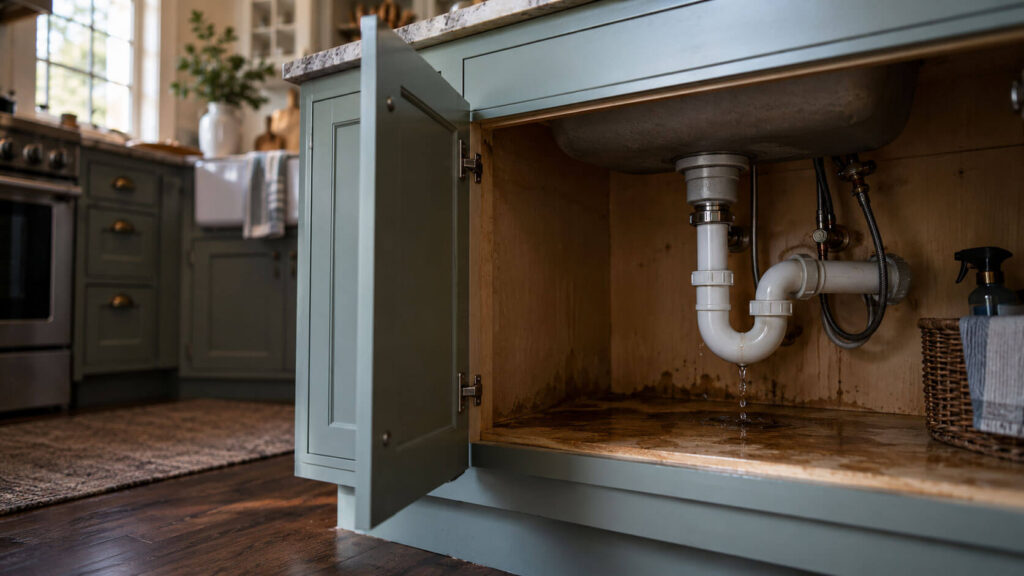
Why is there water under the sink again, even though the repair seemed “simple” the last time? That is the kind of problem that catches homeowners off guard, because small leaks rarely stay small for long. A drip under a kitchen or bathroom sink can stain cabinets, warp particleboard, corrode fittings, and quietly turn into a much larger plumbing issue if it gets ignored. In older homes especially, the real problem is often not the visible drip itself, but the loose fitting, tired shutoff valve, cracked trap, or slightly out-of-square drain connection that made the leak possible in the first place.
What an under-sink leak is really telling you
Most people first notice a damp cabinet floor, a musty smell, or a drip after the sink has been used a few times. That is the symptom. The cause can be something different entirely. Contractors usually start by checking where the water is coming from while the fixture is running, then again when the faucet is shut off, and then once more after the cabinet has had time to dry. That sequence matters, because pressurized supply leaks behave differently than drain-side leaks.
If the leak is tied to supply lines, shutoff valves, faucet connections, or corrosion on the braided line, the issue may show up even when the sink isn’t draining. If it is on the drain side, the P-trap, tailpiece, basket strainer, or slip joints are often the first suspects. Homeowners sometimes assume a leak under the sink must mean the drain is clogged, but that is not always the case. In fact, a water pressure problems issue can sometimes make a fixture behave oddly enough that people misread the whole situation.
Why Hudson Valley homes tend to expose these problems sooner
Older Hudson Valley homes have a way of revealing weak points that newer construction can sometimes hide for years. Cabinets may have been reworked multiple times. Shutoff valves may be original or only partially functional. Plumbing under sinks may have been “updated” with a mix of old and new parts that fit together just well enough to pass for now. That is where trouble starts.
Freeze/thaw cycles, shifting wood cabinets, and years of minor settling can all put stress on supply and drain connections. In homes with basements, crawlspaces, or stone foundations, moisture can also move through the structure in ways that make a leak seem worse than it is—or hide the true source until the damage is already underway. A stain on the cabinet bottom may not line up neatly with the actual drip point. The water often follows the underside of a pipe, a brace, or a seam before it drops where you can see it.
That is why it is worth looking at the whole system, not just the wet spot. If you need help sorting out whether the issue is localized or part of a broader plumbing condition, local plumbing contractors can usually narrow it down much faster than trial-and-error fixes.
The most common causes contractors check first
There are a handful of under-sink issues that come up again and again, and they are easy to miss if you are only looking for a puddle.
- Loose compression fittings on supply lines
- Worn or cracked shutoff valves
- Failed faucet supply hose connections
- Improperly seated P-trap joints
- Cracked washers or slip-joint nuts
- Leaking basket strainers at the sink drain
- Condensation on cold pipes that gets mistaken for an active leak
That last one causes more confusion than most homeowners realize. In humid months, especially around poorly ventilated sinks or unconditioned spaces, condensation can drip off cold lines and look exactly like a leak. It is one reason contractors will dry the area, run water, and then observe it again before recommending a repair. A rushed guess can lead to replacing the wrong part and paying for the same job twice.
What usually goes wrong when people try a quick fix
Plenty of under-sink leaks get “fixed” with a little tightening and a fresh wipe-down. Sometimes that buys time. Sometimes it creates a bigger mess. Overtightening slip nuts can warp washers. Twisting old supply lines can crack fittings that were already brittle. And replacing one visible part without checking the shutoff valve or the faucet body often leaves the true failure point untouched.
That is especially true when a sink has been repaired before. Cheap patchwork tends to stack up under there: different thread types, mixed metals, dated valves, and drain pieces that were never aligned correctly to begin with. A cabinet can look fine from the outside while the plumbing underneath has been gradually compounding for years. At that point, the leak is not the whole problem; it is the latest symptom of a system that has already been stressed.
When a leak is more than a leak
An under-sink leak becomes a bigger issue when it reaches the cabinet base, subfloor, or wall cavity. Once water starts soaking into wood, the repair often stops being a plumbing-only task. Now you are watching for swelling, delamination, mold growth, and hidden deterioration around fasteners and trim. If the sink is on an exterior wall, cold weather can make matters worse by keeping damp materials from drying out properly.
One counterintuitive thing homeowners often miss: the visible drip is not always the expensive part. The real cost often shows up later, after the leak has weakened a cabinet floor, damaged framing, or encouraged corrosion on nearby plumbing hardware. A slow leak that runs for months can end up costing far more than a more obvious failure that gets addressed right away.
What to do before the damage spreads
If you catch the problem early, shut off the water under the sink and dry the area thoroughly. Then check whether the leak returns when the faucet is used, when the drain is filled, or when the supply valves are reopened. That simple distinction can tell you a lot.
If the shutoff valve does not close cleanly, or if the leak is coming from behind the cabinet wall, that is a point where DIY becomes risky. Old valves can snap, compression fittings can fail unexpectedly, and a small mistake can turn a manageable repair into a water shutoff problem for the whole house. In homes with older plumbing, especially around Dutchess or Putnam County where aging fixtures are common, it is usually smarter to get a professional diagnosis before replacing parts at random. Homeowners in need of Dutchess County plumbing services or plumbing contractors in Putnam County often save money simply by identifying the actual source on the first visit.
How to tell whether the issue is drain-side or supply-side
This distinction matters because it determines both urgency and repair scope. Supply-side leaks are pressurized, which means they can keep leaking even when the sink is not in use if the valve is open. Drain-side leaks usually happen only when water is flowing or sitting in the basin. If the cabinet is wet after the sink drains, the P-trap or a connection below the basin may be at fault. If water appears around the shutoff valve or hose connection, the supply side is more likely.
A slow drainage issue can also point to a loose or stressed drain assembly. If you have noticed repeated standing water, gurgling, or odor around the sink, it may be worth reading more about a slow sink drain before deciding whether the leak is really isolated.
Why recurring leaks deserve a deeper look
When the same under-sink area leaks more than once, the problem is often not “bad luck.” It usually means the plumbing layout, fitting alignment, or part quality is working against you. That is common in older kitchens and bathrooms where drains were modified over time, maybe for a new vanity, dishwasher, or replacement faucet. A valve or trap can be perfectly new and still fail early if it was installed under stress or at the wrong angle.
Contractors are often looking for signs of movement, not just moisture. Pipes that rub against cabinet framing, a drain that sags slightly out of pitch, or a supply line that bends too sharply can all create recurring weak points. Fixing the drip without correcting the stress is how homeowners end up with repeat visits.
What a solid repair usually includes
A dependable repair is usually more than a part swap. It should address the failed component, check nearby fittings for wear, confirm the shutoff valve is operating properly, and make sure the cabinet is dry enough to rule out hidden damage. If the leak has been present for a while, the inspection should also consider whether surrounding materials need replacement or whether there is corrosion nearby that could fail next.
That is the part that separates a real repair from a quick patch. A quick patch stops the drip. A real repair prevents the next one.
Frequently Asked Questions
Can I keep using the sink if the leak is small?
It is better not to. Even a small leak can damage cabinets and subflooring over time, and it may be hiding a bigger issue at the valve or drain connection.
Why does the cabinet smell musty if I only see a little water?
Moisture can sit inside the cabinet base or behind trim where it is not obvious. That trapped dampness often creates the smell before visible damage becomes obvious.
Is tightening the fitting usually enough?
Sometimes, but not always. Over-tightening can make the problem worse, especially with older washers, plastic slip joints, or brittle supply connections.
What if the leak only happens when the sink is draining?
That usually points to the drain assembly, P-trap, or basket strainer rather than the supply line. Those parts should be checked for alignment and worn seals.
Should I replace both shutoff valves if one starts leaking?
If the valves are old, stiff, or unreliable, replacing both is often the smarter move. It reduces the chance of needing another shutoff-related repair soon after.
When does an under-sink leak become urgent?
When the leak is active, the valve will not close properly, water is reaching the wall or cabinet base, or you see staining, swelling, or mold growth. At that point, waiting usually makes the repair more expensive.
If you are sorting out a leak and want to avoid guessing, it helps to talk with a trusted local pro who understands how Hudson Valley homes are built and how quickly small plumbing issues can escalate. A careful diagnosis now is often the least expensive decision you can make later.