

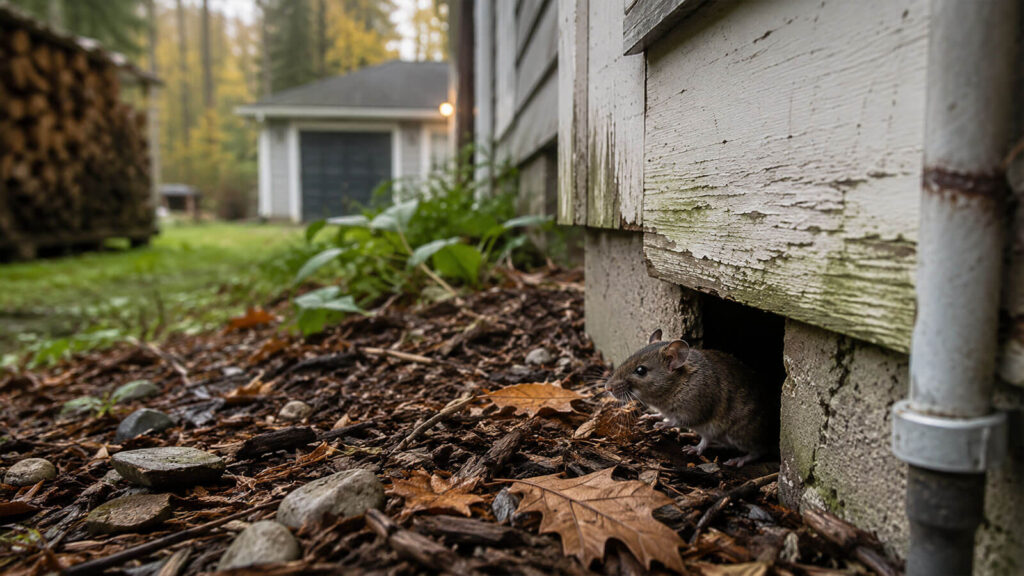
Mice in the yard are easy to dismiss until they show up in the garage, the basement, or behind the stove. By that point, the problem is usually no longer “a few mice outside.” It’s a home entry issue, and the reason it matters is simple: once rodents find cover, food, and a quiet path in, they tend to keep using it.
That pattern shows up a lot in Hudson Valley homes, especially older properties with stone foundations, detached garages, long driveways, wood piles, and utility gaps that never got fully sealed. The good news is that most mouse problems can be brought under control without drama. The bad news is that a lot of homeowners wait until there are droppings, chewed insulation, or a smell in the wall before taking the issue seriously.
If you’re trying to figure out whether the signs around your property point to a nuisance problem or something that needs real attention, it helps to understand what contractors and pest specialists usually look at first. If the signs are spreading beyond the yard, it may be time to talk to pest control contractors rather than keep guessing with store-bought products.
Why yards become the first stop for mice
A mouse problem rarely starts with the kitchen. It usually starts outside, where the conditions are better than homeowners realize. Tall grass, leaf litter, stacked firewood, compost bins, stone walls, shed storage, and overgrown foundation plantings all create cover. Add a little food source, like bird seed or fallen fruit, and the yard becomes a comfortable staging area.
In the Hudson Valley, the seasonal shift makes this worse. Once temperatures drop or heavy rain pushes animals out of saturated ground, mice start looking for dry, protected paths. That’s where homes with older construction details get vulnerable. Gaps around sill plates, utility penetrations, garage doors, bulkhead entries, and worn door sweeps are all common entry points.
One counterintuitive thing homeowners often miss: the mice you notice near a shed or woodpile are not always the whole problem. The visible activity outside can be a sign that they’re already testing the house perimeter. By the time you hear scratching in a wall, the entry point may have been open for a while.
Signs the problem is moving closer to the house
Not every sign means an infestation, but certain patterns should raise the alarm. A single mouse sighting can be random. Repeated signs in the same areas usually are not.
- Droppings along basement walls, near pantry shelving, or behind appliances
- Chewed bird seed bags, pet food, cardboard, or stored holiday decorations
- Small shredded nesting material in garage corners, attic insulation, or utility spaces
- Scratching sounds at night, especially in wall voids or ceilings
- Grease marks or rub lines along framing, baseboards, and foundation ledges
- Pets fixating on one wall, cabinet, or closet area
Homeowners sometimes focus on the wrong clue. They’ll see one mouse outside and assume it’s harmless, or they’ll find a few droppings and think a poison bait station will solve everything. That’s where people get tripped up. Baits may reduce visible activity, but they do not close the entry points, remove shelter, or fix the moisture and food conditions that invited the mice in first.
What contractors usually inspect before recommending a fix
A good pest control inspection is not just about spotting the mouse. It’s about tracing the path. Experienced pros usually look for where rodents are entering, where they’re nesting, and what’s making the property attractive in the first place.
That means checking more than the obvious areas. Foundation cracks, pipe penetrations, garage thresholds, attic vents, utility chases, dryer vents, and door seals often tell the story. In older homes, especially those with additions or multiple remodels, there can be overlapping gaps that no one noticed because each repair job only solved one layer of the issue.
Drainage matters too. Damp landscaping, standing water, and poor grading can make the perimeter more hospitable to pests. If the yard stays soggy after rain, that’s not just a water issue. It can become a sheltering issue. Resources like yard drainage problems after heavy rain are worth reviewing because moisture problems and pest pressure often show up together.
Why DIY traps and store-bought bait often disappoint
Traps can help, but they are usually a control measure, not a solution. If the house still has access points, new mice will keep replacing the ones you catch. That’s why people often feel like they’re “winning” for a week and then the problem returns.
Store-bought bait has its own complications. In a basement, crawlspace, shed, or garage, loose bait can create odor issues if rodents die in inaccessible areas. In homes with kids or pets, improper placement adds a safety concern. And in colder weather, bait often gets consumed or ignored depending on the food sources nearby. It’s not a strategy you want to rely on blindly.
What usually works better is a layered approach: identify the entry points, reduce attractants, improve sanitation, seal structural openings, and use targeted control where needed. That is why professional pest control is often less about “spraying for mice” and more about understanding how the property behaves.
Hidden conditions that make mouse problems worse in Hudson Valley homes
Some homes are simply more inviting than others, and not always for reasons homeowners expect. Older basements with stone or block foundations can have gaps that change with the seasons. Freeze/thaw cycles open cracks a little more every year. Detached garages often have weak door seals. Workshops and sheds tend to collect cardboard, fabric, stored seed, and clutter that mice love.
Then there are the properties with mature trees hanging over the roofline. Acorns, branches, and easy climbing routes can all contribute to rodent pressure. Add a bird feeder near the house, and you’ve created a reliable food source within a few feet of the structure.
In Westchester County, tighter lots and older residential construction can make the access points more concealed. In more rural parts of Putnam and Dutchess counties, the issue is often coverage area: more outbuildings, more storage, more perimeter, more places to miss. If you’re comparing service options and want county-specific help, local pest control help in Westchester County and Putnam County pest control services can be useful starting points.
What to do before the problem spreads
The smartest first move is usually not more bait. It’s observation. Look for droppings, rub marks, chewed packaging, and entry points around the entire perimeter. Pay attention to the less glamorous areas: behind the oil tank, around utility lines, at the garage corner, under the deck, and near foundation vents.
If you’re seeing repeat signs inside the home, don’t wait for the issue to become obvious. Mice reproduce quickly, and once they establish a nest in insulation or wall cavities, cleanup becomes more involved. They also contaminate stored materials and can cause real damage to wiring, especially in places where insulation has already been disturbed.
At that stage, a contractor-informed pest inspection is usually the better path than a series of one-off fixes. That’s particularly true if you’re trying to protect an older home’s value. Hidden rodent activity can become a resale problem fast, especially when there’s evidence of repeated intrusion in basements, attics, or utility rooms.
Why sealing matters more than most people think
Sealing is the part homeowners often underestimate because it doesn’t feel as dramatic as trapping. But it’s usually the most important step. Mice can fit through surprisingly small openings, and sealing has to be done carefully. Not every gap should be filled the same way, and not every material holds up outdoors or through winter movement.
Contractors usually prioritize access points first because that’s where the recurring problem is. Door sweeps, caulk, copper mesh, hardware cloth, and proper flashing details all have different uses. A sloppy foam job around an opening may look finished, but if the material degrades or gets chewed through, the repair doesn’t last.
This is where homeowners sometimes save money in the wrong place. A cheap fix that fails in one season costs more than a proper exclusion job the first time. And if the property has multiple outbuildings, the work needs to be handled systematically or the rodents simply shift from one structure to another.
When the issue suggests more than a mouse problem
Sometimes what looks like a rodent issue is really a broader property condition issue. Moisture, gaps, clutter, poor ventilation, and neglected maintenance can all feed the same problem. If you’re seeing multiple pest indicators, or if the yard and structure both seem to be attracting unwanted activity, it may be worth looking at other early pest warning signs around the home as well.
That broader view matters because homeowners often fix the symptom and miss the pattern. For example, a garage with mice, ants, and damp corners may have a drainage issue, a threshold problem, and a storage problem all at once. Treating only the visible pest rarely solves the root cause.
How to reduce recurring mouse activity around the property
There’s no magic trick, but a few habits make a real difference over time:
- Store pet food, bird seed, and grain in sealed containers
- Keep firewood elevated and away from the foundation
- Trim vegetation away from walls, vents, and roof edges
- Repair worn door sweeps and weatherstripping
- Clean up spilled seed, fallen fruit, and debris near sheds and patios
- Inspect basements, attics, and garages seasonally, not just when you see a problem
None of that is glamorous, but it works because it removes the conditions rodents depend on. A lot of recurring pest issues are really property management issues in disguise.
Frequently Asked Questions
Are mice in the yard automatically a sign they’re getting inside?
Not automatically, but repeated activity near the foundation, garage, or shed is worth taking seriously. Yards with cover and food sources often become the staging area before mice enter the house.
What’s the first thing to check if I suspect mice?
Check droppings, chewed packaging, entry gaps around doors and utilities, and nesting material in basements, garages, and attics. Those clues usually tell you more than seeing a mouse once.
Do traps solve a mouse problem on their own?
Usually not. Traps can reduce numbers, but if the entry points stay open, the problem tends to come back. Exclusion and sanitation matter just as much.
Why do older Hudson Valley homes seem more prone to rodent issues?
Older homes often have stone foundations, aging seals, additions, and seasonal movement that create small openings. They also tend to have more detached structures and storage areas where mice can hide.
Is it worth calling a professional for just a few signs?
If the signs are repeated or you’re seeing activity in multiple areas, yes. Early intervention is usually less expensive than dealing with a nest, contamination, or repairs to damaged insulation and wiring.
Can drainage really affect pest problems?
Yes. Damp soil, standing water, and poor grading can make the perimeter more attractive to rodents and other pests. Moisture issues and pest issues often overlap more than homeowners expect.
If you’re noticing mouse activity around the yard, garage, or foundation, the safest move is to treat it as a property issue, not just a pest issue. A careful local inspection can help you avoid the expensive version of the problem later and point you toward the right kind of repair or exclusion work before the signs spread.