

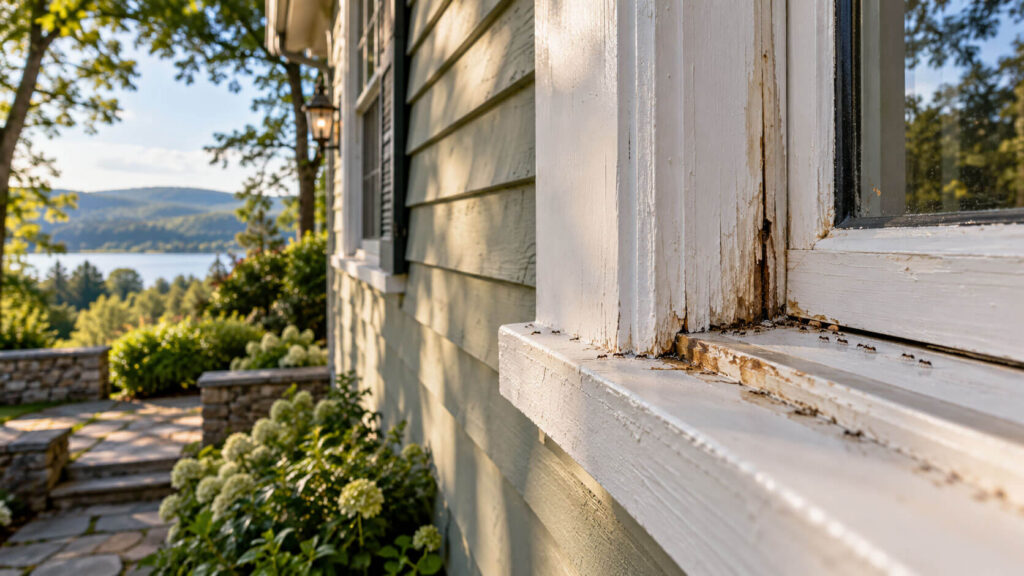
Why do ants seem to show up in the same place every spring — usually around a windowsill, a piece of trim, or a crack near the foundation — and then come back even after you’ve sprayed them? That pattern is frustrating because it looks minor at first. In reality, it often points to a much more useful clue: the house is giving them a reason to stay. Food is only part of the story. Moisture, tiny gaps, hidden wood decay, and aging exterior details are usually doing more of the work than homeowners realize.
That’s why recurring ant activity around siding or window trim should be treated as more than a nuisance. In older Hudson Valley homes especially, small openings around trim, flashing, and utility penetrations can become regular access points. If the area also stays damp after rain or snowmelt, ants are even more likely to keep returning. When that happens, it’s worth looking beyond the obvious and checking for recurring ants in older homes before the problem turns into a cycle of temporary fixes.
What ants around siding and trim are really telling you
A few ants outside the house is not automatically a major pest issue. But repeated activity in the same zone usually means something in the building envelope is attracting them or helping them get in. Contractors tend to look first at the obvious transition points: window casing, door trim, corner boards, soffits, fascia, foundation joints, and the seam where siding meets masonry or trim. Those are the places where caulk cracks, paint fails, or flashing details were never fully sealed in the first place.
The other thing professionals check is moisture. Ants are often drawn to damp materials, and exterior dampness can come from gutters that overflow, downspouts that dump too close to the house, poor grading, clogged drain paths, or a hidden roof-edge leak that keeps a wall cavity or trim board wet. If you’re seeing ant activity near the same spot after every rain, the issue may be tied to drainage problems that keep exterior areas damp rather than the ants themselves.
That’s one of the counterintuitive parts of pest issues: the visible insects are often the symptom, not the source.
Why quick spray fixes usually fail
Store-bought sprays can knock down the ants you can see, but they rarely solve the reason they’re there. In fact, spraying the perimeter repeatedly can make homeowners feel like the problem is under control right up until activity returns in a different seam or on another elevation. That’s because the colony, nest location, or entry point may not be where the trail is visible.
Homeowners also underestimate how persistent ants are when they find a favorable route. If the trim is soft, caulk is failing, or a gap opens and closes with temperature swings, the same pathway can keep working for months. In the Hudson Valley, freeze/thaw cycles make this worse. Materials expand, contract, split, and separate in ways that aren’t always obvious from the ground. A tiny gap in April can become a much better entry point by July.
If the ant issue keeps showing up around exterior woodwork, it may be time to bring in pest control contractors who can inspect the pattern rather than just treating the surface activity. And if you’re in the area and want a more localized starting point, there are also Dutchess County pest control services for homeowners dealing with recurring activity around siding, trim, and foundation edges.
The spots contractors usually inspect first
When ants are showing up around siding or trim, the first inspection is usually less dramatic than homeowners expect. It’s not about tearing into walls right away. It’s about finding the small failure points that explain the pattern.
1. Window and door trim
Look for cracked caulk, open miters, soft wood, loose trim, and paint failure. If trim is starting to cup or swell, there may already be moisture intrusion behind it.
2. Siding seams and corners
Vertical seams, outside corners, and places where siding meets brick, stone, or foundation walls often hide gaps. On older homes, previous patchwork repairs can create a few inches of perfect ant access without looking obviously damaged.
3. Soffits, fascia, and roof-edge details
Ants don’t only travel at ground level. If the roof edge, soffit vents, or fascia boards are compromised, insects can move through protected cavities and show up in unexpected places.
4. Moisture sources nearby
Overflowing gutters, short downspouts, clogged splash blocks, wood mulch piled too high, or a slope that sends water toward the house all matter. Dampness near exterior wood is a quiet invitation.
5. Soft or damaged wood
Soft trim, rot at the sill, or compromised framing behind siding changes the equation. At that point, the issue may no longer be just pests. It can become a repair-and-treatment problem.
That last point is where homeowners get into trouble. If the wood is soft, patching over it with caulk or paint is just hiding the evidence. The repair may hold for a season, but the underlying issue keeps progressing.
What makes Hudson Valley homes a little different
Older homes in the region often have a mix of original construction and layered repairs from different decades. That creates plenty of places where ants can find shelter: old window casings, settling trim joints, foundation cracks, fieldstone or stone foundations, and additions that were tied in later without perfect weatherproofing. Add heavy tree cover, shaded north-facing walls, and damp spring weather, and the exterior stays attractive to insects longer than people expect.
Detached garages, workshops, and outbuildings can also become part of the problem. They often have less insulation, more gaps, and more exposed wood than the main house. Ants can move between structures if there are overlapping moisture and access issues. On larger properties with long driveways and wooded edges, the source of the problem can be a good distance from the room where the ants are finally noticed.
This is one reason a visual check from one spot rarely tells the full story. Ants around the trim may be connected to a wet corner under the porch, a failing gutter run, or a hidden opening behind a piece of aluminum wrapping. The stain, swarm, or trail you see is not always where the actual problem starts. Experienced contractors know that and investigate outward, not just where the insects happen to be visible.
When it becomes more than a nuisance
Not every ant sighting means structural damage. But certain signs make the issue more serious. If you notice hollow-sounding trim, crumbling wood, frass-like debris, paint bubbling, or repeated ant activity in the same exact spot, it’s worth taking a harder look. In some cases, what appears to be a simple ant trail is actually connected to hidden wood damage or an entry path shared with other pests.
That’s where distinguishing nuisance activity from actual damage matters. If you’re seeing signs that suggest wood compromise, it helps to review early pest damage warning signs before assuming the problem is only seasonal. Carpenter ants, for example, are not the same as harmless foragers moving along a wall, and the repair path can change quickly if the wood behind the trim is already failing.
Delaying the inspection is usually what raises the cost. A small exterior gap can become a larger moisture problem. A moisture problem can become wood rot. Wood rot can lead to trim replacement, paint failure, and in some cases hidden structural repairs. The repair bill doesn’t spike because of the ants themselves; it spikes because the entry point was ignored long enough for the building materials to deteriorate.
Why DIY caulking is not always the right first move
Caulking over gaps feels productive, and sometimes it is. But it can also mask the wrong thing. If a gap is active because wood is moving, trim is rotting, or water is repeatedly entering the assembly, fresh caulk just buys time. It doesn’t solve the source. The same is true for painting over failing joints. The house may look better for a while, but the problem is still there underneath.
Another common mistake is sealing visible gaps without checking for trapped moisture. If water is already getting behind siding or trim, sealing the outside too aggressively can keep materials wet longer. That’s a bad tradeoff. It can make hidden decay harder to spot and delay the repair work that should have been done first.
The better approach is usually to inspect, identify why the area is attractive to ants, and then decide whether the fix is a simple seal, a moisture correction, or a carpentry repair. That sequence matters.
What a practical repair plan usually includes
A solid response does not start with pesticides alone, and it does not start with exterior patching alone either. It usually includes a little of both, plus a moisture review.
- Identify the exact exterior area where activity is concentrated.
- Check trim, siding joints, and window/door flashings for open gaps.
- Look for soft wood, peeling paint, or hidden decay.
- Review gutters, downspouts, grading, and splash areas nearby.
- Treat the pest issue if active ants are present.
- Repair the building detail that allowed the activity to repeat.
That combination is especially useful for homes where seasonal moisture and aging exterior materials work together. In some neighborhoods, homeowners try to solve the pest issue first and the drainage issue later. In practice, the order should often be reversed or handled together if the exterior is staying wet.
For homeowners in neighboring areas, pest control help in Putnam County can be useful when the same type of recurring activity keeps showing up around siding, trim, or porch framing. And in other parts of the region, Westchester County pest control contractors can help evaluate whether the ants are only a nuisance or part of a larger moisture-and-entry issue.
How to keep the problem from coming back
Recurring ant problems rarely disappear because of one treatment. They stop when the home stops offering a predictable route in. That means paying attention to seasonal maintenance, especially after heavy rain, late snow, or a winter with repeated freeze/thaw swings.
It helps to check the same trouble spots a few times a year rather than waiting until the ants return. Focus on window caulk, exterior trim joints, foundation edges, downspout discharge, and any areas where water splashes onto siding. If a corner always looks damp or a piece of trim always seems to fail first, that’s the place to investigate, not just repaint.
For homeowners who want to understand whether their issue fits a bigger spring pattern, a useful starting point is reviewing recurring ants in older homes along with a look at moisture conditions around the property. The goal is not to treat every ant sighting as an emergency. The goal is to notice when the pattern is trying to tell you something about the house.
Frequently Asked Questions
Why do ants keep showing up around my siding or window trim?
Usually because there’s a mix of access and attraction: small gaps, failing caulk, damp wood, or nearby moisture. The trail you see often points to a larger exterior issue.
Is it enough to spray the ants I can see?
Not usually. Sprays can reduce visible activity, but they don’t fix the entry point or the moisture condition drawing them back.
Could ants around trim mean wood damage?
Sometimes, yes. If the trim feels soft, looks swollen, or keeps failing in the same place, there may be rot or hidden deterioration behind it.
What should I check first?
Start with window and door trim, siding seams, soffits, gutters, and downspouts. Then look at grading and any spots that stay damp after rain.
When should I bring in a professional?
If the ants keep returning in the same area, if there’s visible wood damage, or if you can’t tell whether the issue is pests, moisture, or both, professional inspection is a good next step.
Can drainage problems really affect pest activity?
Yes. Damp exterior areas can attract ants and also create the conditions for wood decay, which makes repeated pest activity more likely.
If the same strip of siding or piece of trim keeps drawing attention every spring, it’s usually worth getting a local professional opinion before the repair list gets longer. A careful inspection now can save a lot of guesswork later — and help you fix the real issue instead of chasing the symptoms.
