

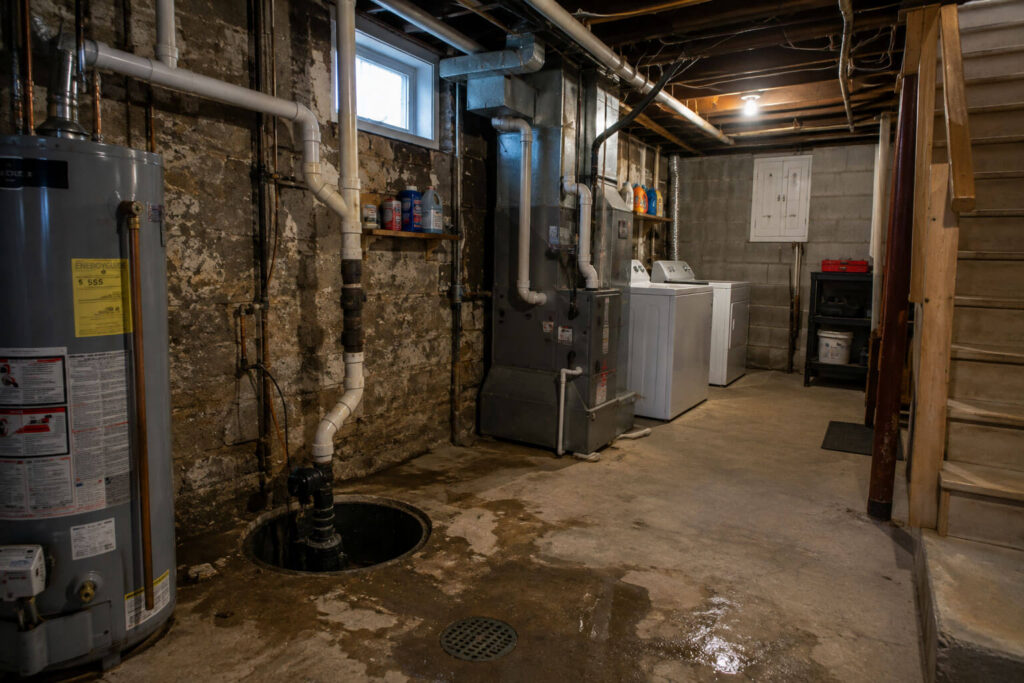
That musty smell in the basement has a way of making homeowners second-guess everything. Sometimes it is old damp concrete. Sometimes it is a floor drain that dried out. And sometimes it is the first sign that a plumbing problem has been hiding in plain sight long enough to start affecting the air in the house.
What makes basement odor frustrating is that it rarely announces itself with one obvious clue. In older Hudson Valley homes, smells can move through the house faster than the actual source of the problem. Heating cycles, stack effect, humidity, and poor ventilation can pull sewer gas, moisture, or stagnant air out of a basement and make it seem like the whole home is affected. That is why experienced contractors usually start by looking at the plumbing traps, drain lines, sump pit, and any place where water is supposed to seal air out of the system.
If you are trying to sort out whether the smell is a nuisance or a real plumbing issue, it helps to know what typically causes basement odors, what gets misdiagnosed, and when it is smart to bring in local plumbing contractors before the problem gets more expensive.
Why basement odors are worth taking seriously
A basement smell is not just about comfort. In practice, it often points to moisture, drainage, or sewer gas conditions that can damage finishes, invite mold, or signal that something mechanical is not doing its job. The trouble is that homeowners often chase the smell instead of the source.
That is where people lose time and money. Air fresheners, bleach, and dehumidifiers may make the basement smell better for a day or two, but they do not fix a dry trap, a cracked cleanout cap, a failing sump lid, or a drain line that is letting gases escape. Contractors see this pattern constantly: the odor gets treated as a cosmetic issue when it is actually a system issue.
In Dutchess County, Putnam County, and much of Westchester, older homes with stone foundations, partial basements, and long-term settling can create a few extra complications. A drain that was fine for years can start leaking air once joints loosen or the soil around the home shifts with freeze-thaw cycles. If the smell is strongest after rain, after the heat turns on, or when the basement door has been shut for a while, that pattern matters.
The most common sources homeowners miss
People usually assume a basement odor means “sewer” or “mold.” Sometimes it is one of those. Often it is something smaller and more specific.
Dry floor drains and unused fixtures
A floor drain with no water in the trap can let sewer gas come right back into the basement. This is common in utility rooms, laundry areas, and older basements where drains are no longer used often. If a drain has gone dry, the fix may be simple, but the reason it dried out can matter too. If it keeps happening, the issue may be evaporation, an improper trap, or a venting problem.
Sump pits and loose lids
A sump pit can be a surprisingly common odor source. Standing water, sediment, and a loose or missing cover can all let basement air pick up a foul smell. If the discharge line is not working properly or the pit is collecting debris, the smell can get worse after storms. Homeowners who are investigating this area often benefit from checking sump pump maintenance before assuming the sump pump itself has failed.
Old drain traps and slow leaks
Sometimes the problem is not a dramatic leak. It is a slow seep at a joint, a failed trap primer, or a small amount of wastewater pooling where nobody looks. The stain or odor often shows up away from the actual source. That is one of the most counterintuitive parts of basement troubleshooting: the smell near the utility sink is not always coming from the sink. Air moves around framing cavities, slab joints, and pipe chases in ways that make the source feel misleading.
Radon mitigation or ventilation changes
Sometimes a homeowner notices a basement odor after other work has been done. New air sealing, weatherstripping, or mechanical ventilation can change how air moves through the house. That can expose an existing sewer gas issue that was previously diluted. In other words, the fix is not always the cause; it sometimes just reveals the problem sooner.
What contractors usually inspect first
When a plumber or experienced contractor is called for a basement smell, the first pass is usually practical, not dramatic. They are looking for the easiest ways air or moisture could be entering the space.
- Floor drains, laundry drains, and any unused traps
- Sink traps and visible drain connections
- The sump pit, lid, and discharge line
- Signs of standing water, rust, or sediment buildup
- Cleanout caps and loose fittings
- Moisture stains around slab edges or foundation walls
- Any odor changes after the boiler, furnace, or dehumidifier runs
That last point matters more than people think. In some homes, the heating system creates enough air movement to pull odors from one part of the basement into the rest of the house. Homeowners often blame the furnace when the real issue is a drain, trap, or opening in the plumbing system nearby.
If the smell seems tied to drainage or a slow backup, it may also be worth understanding when drain cleaning may be needed. A partially blocked line can create odor long before it creates a full backup.
Why quick fixes often fail
Basement odor problems are a place where cheap fixes can waste a lot of time. Pouring more water into a drain trap is fine as a first step, but it is not a real solution if the trap keeps drying out. Sealing around a pipe penetration can help, but it will not stop sewer gas if the drain system itself is leaking. Running a dehumidifier can improve the air, but it will not correct a plumbing defect or drainage issue.
One of the biggest homeowner mistakes is treating the smell as a one-room problem. In reality, odors in basements often connect to broader moisture and drainage conditions around the house. If the basement is taking on water at the foundation, or if runoff is collecting near the exterior walls, the smell may be part of a larger issue. That is why some odor complaints end up leading to basement drainage problems rather than a single plumbing repair.
That is especially relevant in the Hudson Valley, where heavy rain, sloped lots, wooded yards, and aging foundation walls can all work against a dry basement. A house can smell musty or sewer-like simply because moisture and air circulation are feeding each other.
When the issue is plumbing, not just moisture
There is a difference between a damp basement and a basement that smells like sewer gas. The first is usually a moisture management problem. The second is usually a plumbing or venting problem, even if moisture is also present.
Signs that point more strongly toward plumbing include:
- Odor that gets stronger after running water elsewhere in the house
- Bubbling or gurgling in a nearby drain
- Odor near a floor drain, cleanout, or utility sink
- Smell that fades and returns in cycles
- Visible water level changes in a sump pit or drain trap
If the problem is recurring and not just seasonal, there is a good chance something in the drain system, venting, or trap sealing needs professional attention. Homeowners in the region who need a second opinion often start by speaking with plumbing contractors in Dutchess County or checking broader Putnam County plumbing services if the home sits closer to that service area.
When the smell is a warning sign, not just an annoyance
Not every basement odor is an emergency. But a few patterns deserve faster action.
If the smell is strong enough to make the basement unpleasant to enter, if it appears alongside visible moisture, if there is a drain that is backing up, or if anyone in the home notices headaches or nausea, the problem needs a closer look. Sewer gas should not be ignored. Neither should repeated musty odors that come back after every heavy rain.
Another point homeowners sometimes miss: a smell that gets worse in winter can still be a drainage or moisture issue. Cold weather changes how air moves through the house. If the basement is pulling in air through cracks, unsealed penetrations, or a loose drain cover, the odor may become more noticeable even though the source has not changed.
That is one reason contractors often ask what changed before the smell started. New appliances, recent plumbing work, a sump pump replacement, or even a home energy upgrade can alter airflow enough to reveal an underlying issue.
What makes Hudson Valley homes a little different
Older homes in the Hudson Valley tend to stack the odds in a few familiar ways. Stone foundations, older slab additions, unfinished utility spaces, and long-term settling can all create tiny gaps that become odor pathways. Mature trees and heavy root systems can also interfere with drainage patterns outside the house.
In homes with septic systems, the question gets even more specific. A basement smell is not always caused by a failed septic field, but it can be connected to backups, venting problems, or drain issues inside the house that show up before the septic system itself appears to be in trouble. That is why a contractor will usually look at the full path of water and air, not just the visible fixture.
These homes also tend to have a history. A previous owner may have capped a drain, modified a laundry area, or added a sump without updating the rest of the system. Those changes can work for years and then suddenly stop working after a storm, a freeze, or a new appliance load.
What a smart next step looks like
If the smell is mild and you can identify a likely dry trap, a little water in the drain may solve it. If the odor is recurring, strong, or tied to moisture, that is usually not a problem to keep guessing at. The best next step is a careful inspection from someone who understands how plumbing, drainage, and basement air movement interact.
That does not mean every odor turns into a major repair. Sometimes it is a simple trap issue or a sump lid that needs to be sealed properly. But the real value of a professional look is that it prevents homeowners from patching the wrong thing for months.
If the issue appears tied to drainage, runoff, or water collecting near the foundation, it may be worth addressing the bigger picture before it turns into repeat cleanup and odor control. The longer the moisture stays in play, the more likely it is that wood, insulation, or finishes start absorbing the smell too.
Frequently Asked Questions
Why does my basement smell worse when the heat turns on?
Heating cycles can change air pressure and pull odors from drains, cracks, or the sump area into the rest of the house. That does not mean the furnace is the cause. It often means the heating system is revealing an existing plumbing or moisture issue.
Can a dry floor drain really cause sewer smells?
Yes. A floor drain trap is supposed to hold water and block sewer gas. If it dries out, odors can come straight through. This is one of the simplest problems to check, but it is also one of the easiest to overlook.
Is a musty smell always mold?
No. Musty odors can come from damp concrete, poor ventilation, minor seepage, or stored items absorbing moisture. Mold is possible, but it should not be the default assumption.
Should I pour bleach down a drain that smells?
Not as a first move. Bleach can mask the odor briefly, but it does not fix a dry trap, venting issue, or leak. In some cases, it is just treating the symptom and delaying the real diagnosis.
When is a basement odor a plumbing emergency?
If the smell is strong, sudden, paired with backup or visible wastewater, or accompanied by sickness or severe headaches, treat it seriously and get it inspected promptly. Sewer gas and active drainage problems should not be ignored.
Do basement odors always mean expensive repairs?
No. Some are minor. But the risk is that a minor odor can point to a bigger problem if it keeps returning. The safest approach is to identify the source early instead of waiting until the issue affects flooring, framing, or indoor air quality.
Basement odors are one of those home problems that look small until they are not. If you are not sure whether you are dealing with a dry trap, a drainage issue, or a deeper plumbing concern, it is usually smarter to get a local professional opinion early. That is often the difference between a straightforward fix and a much bigger repair later on.