

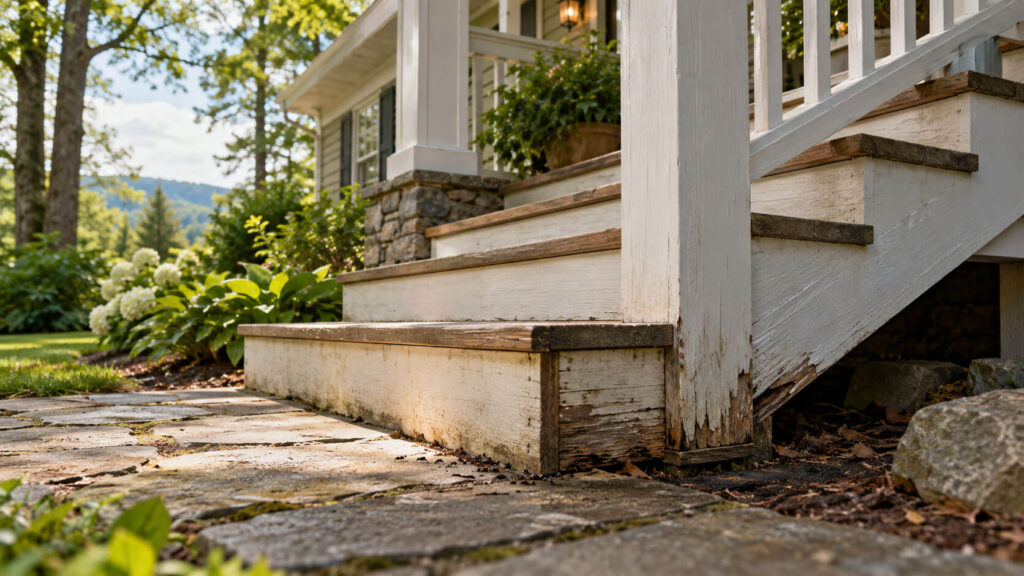
Why Deck Steps and Porch Openings Turn Into Pest Problems in Hudson Valley Homes
It usually starts with something small: a few ants near the bottom step, a mouse scratching in the void under a porch, or a bit of soft wood along a stair stringer that seemed “fine for now.” Those little signs are easy to dismiss, especially when the stairs still feel solid underfoot. But exterior steps and porch openings are exactly where pest problems tend to begin, because they combine moisture, aging wood, hidden gaps, and easy access to the house.
That’s part of why these issues are often misread. Homeowners focus on the insect or rodent they can see, when the bigger problem is usually the condition of the wood, the drainage around the structure, or a gap that’s been there long enough to become a highway. In a lot of Hudson Valley homes, especially older properties with additions, pressure-treated repairs from years ago, or sagging stoops, the entry point is the real story. If you’re already noticing signs of activity, it’s worth looking at the broader picture and not just the pests themselves. For some homes, that means talking with pest control contractors in Dutchess County before the problem spreads into wall cavities, insulation, or the framing around a doorway.
Why deck stairs and porch openings attract pests in the first place
Exterior steps sit in one of the most vulnerable parts of the house. They’re close to grade, exposed to runoff, and often built where water lingers after storms or snow melt. In the Hudson Valley, that matters more than people realize. Freeze-thaw cycles open tiny cracks wider. Mature trees keep areas damp and shaded. Heavy rain can wash soil away from landing pads and create new gaps under the structure. Once that happens, pests don’t need much encouragement.
Carpenter ants, termites, mice, wasps, and even stinging insects all exploit different parts of the same weakness. Carpenter ants and termites are drawn to damp or compromised wood. Mice are looking for cover and a tight opening. Wasps often favor the underside of stairs, soffits, and sheltered corners where they can build undisturbed. The problem is rarely the pest alone. It’s the access, the moisture, and the wood condition all working together.
Contractors who deal with exterior repairs usually look at the same first questions: Is the wood rotting? Is the step shifting? Is water getting trapped where it shouldn’t? Are there unsealed seams or open gaps behind trim, skirting, or risers? Those details tell you whether you have a simple exclusion issue or a repair problem that needs structural attention too.
The warning signs homeowners tend to overlook
The obvious signs are the ones that make people call right away: visible ants, rodent droppings, or a nest tucked under a stair. The less obvious signs are often the ones that matter more.
- Wood that feels soft, spongy, or hollow near the base of stairs
- Paint that keeps peeling in one area despite touch-ups
- Fine sawdust-like material near seams or on the ground below steps
- Small mud-like tubes or damp staining on wood surfaces
- Gaps where the step meets the house, landing, or trim
- Scratching or movement sounds inside a porch enclosure or hollow support space
One counterintuitive detail that catches people off guard: the visible stain or damage is often not directly above the actual pest entry point. Water and pests both move through the path of least resistance, which means the problem may start at a failed joint, open flashing, or hidden seam several feet away. That’s why patching the most visible spot often doesn’t solve anything.
If you’re seeing signs of wood damage, it can help to compare them with the termite and carpenter ant warning signs that contractors and inspectors look for before recommending a treatment or repair plan.
Why quick fixes fail more often than homeowners expect
A lot of people try the fastest possible fix: spray something, caulk a visible gap, or add a board over the opening. Sometimes that buys a little time. More often, it hides the symptom and leaves the cause untouched.
Caulk around a deteriorating step, for example, can trap moisture instead of helping it dry out. That can accelerate rot in hidden wood. Spraying for ants without addressing wet framing or decayed trim often means they return from a different side of the same void. Sealing one mouse hole while ignoring the underside of a porch can lead to a second route showing up a week later.
That’s why experienced contractors and pest professionals tend to inspect the structure before they discuss treatment. If the step assembly is failing, no amount of short-term pest control is going to make the problem stay solved. In some cases, the right fix is as much about carpentry as it is about pest control.
When deck boards, risers, skirting, or framing have deteriorated, homeowners may need more than treatment. In those situations, it makes sense to look at deck and patio construction contractors who can address the structural opening that pests are using.
What contractors usually check first
There’s a reason good contractors don’t start with the most visible damage. They start with the parts that explain why the damage is happening.
For deck stairs and porch openings, that usually means checking drainage, grading, flashing, trim condition, and the underside of the structure. On older Hudson Valley homes, it also means looking for stone foundation movement, settled footings, weathered sill areas, and places where patched repairs have layered over each other. A step that looks cosmetic from the top can be hiding a much larger issue underneath.
Contractors also pay attention to how the structure meets the house. If a stair landing was added later, or if porch framing was altered over time, the connection points may not be as protected as the rest of the home. That’s where pests often gain access. Loose trim, gapped skirt boards, and old flashing are all easy entry points that homeowners rarely inspect closely.
Why Hudson Valley homes are especially prone to this issue
The region’s housing stock creates a perfect mix of conditions. Many homes have older woodwork, long-exposed exterior stairs, or porches that were built in stages rather than all at once. Add mature landscaping, shaded side yards, wet springs, and snow piled against entrances in winter, and the area around a porch can stay damp for long stretches.
That moisture matters. Damp wood doesn’t just invite rot; it changes how pests behave around the home. Insects are drawn to weakened materials, and rodents are more likely to shelter in tucked-away voids where wind, predators, and temperature swings are less of a factor. Detached garages, workshops, and side entries often create even more opportunities because they’re used less frequently and inspected less often.
Homeowners in Putnam and Westchester see a lot of the same pattern, especially where porches and steps are close to tree cover or drainage runoff. If the area around the home feels like it never fully dries out, that’s a clue worth taking seriously. It may be useful to compare what you’re seeing with Putnam County pest control services or Westchester pest control help if you want region-specific support for the problem.
When pest control and repair need to happen together
Some pest issues are straightforward. Others are really maintenance issues with a pest problem attached. That distinction matters because it affects what gets fixed first and how likely the problem is to return.
If the step structure is sound and the opening is simply unsealed, exclusion and targeted pest control may be enough. If the wood is soft, the landing is sagging, or the underside is damp and enclosed, repair becomes part of the solution. Skipping that step usually means recurring service calls, recurring damage, and recurring frustration.
That’s also why a truly useful inspection is broader than the pest itself. It should include the adjacent soil, any gutters dumping near the stair, the condition of the trim and skirting, and the likely hidden voids behind the visible finish. Homeowners often want the “pest answer,” but the better answer is usually the one that prevents the next entry point from opening up.
If you’re trying to get ahead of a recurring exterior problem, a local contractor who understands both the structure and the pest pressure can be far more helpful than a quick spray-only approach. That’s where the broader network of local pest control contractors becomes especially useful for homeowners who want the issue handled in a lasting way.
How to reduce the risk before it turns expensive
The best prevention is less dramatic than most homeowners expect. It’s mostly about keeping wood dry, gaps sealed, and hidden spaces from becoming protected nesting zones.
- Keep gutters and downspouts moving water away from porch and stair areas.
- Look for soil washout or settling around step footings after heavy rain.
- Check trim, skirting, and risers for small openings before pests use them.
- Trim back shrubs and branches that keep the area shaded and damp.
- Watch for repeated peeling paint or soft spots, not just visible damage.
- Inspect the underside of stairs and enclosed porch spaces at least seasonally.
There’s also a reason prevention is cheaper here than it looks on paper. Once pests get into wet or damaged wood, the issue starts to compound. You may be dealing with exclusion, treatment, carpentry, and possibly insulation or trim replacement. What began as a loose stair board can turn into a multi-trade repair if it sits through another season.
For homeowners trying to avoid recurring rodent pressure around the same exterior spots, it can also help to understand the broader site conditions. A look at yard conditions that attract mice can make it easier to see why exterior cover, clutter, and structural gaps often work together.
Why delaying this kind of repair usually costs more later
Exterior openings around steps and porches don’t stay static. They change with weather, vibration, and use. A minor gap can become a larger gap after a winter of freeze-thaw movement. A damp board can move from surface staining to true rot. Once the wood loses strength, the repair shifts from sealing to rebuilding.
That’s the point where costs begin to climb. You’re no longer just paying to keep pests out. You may be replacing structural members, trim, or portions of the step assembly. And if the problem has been active for a while, there’s always the possibility that pest activity has expanded into nearby wall spaces or insulation.
The frustrating part is that homeowners often wait because the issue doesn’t look urgent. But with exterior stairs and porch openings, the visible damage usually arrives after the real damage has already been happening for a while.
Frequently Asked Questions
Are ants near deck steps always a sign of structural damage?
Not always, but they’re worth a closer look. Ants often show up where there’s moisture, softened wood, or an easy entry gap. If they keep returning in the same spot, there’s usually a reason behind it.
Can I just seal the gaps and be done?
Sometimes, yes, if the structure is sound. But if the wood is rotting or the area stays damp, sealing without repair can trap moisture and make the problem worse.
Why do mice seem to keep coming back to the same porch area?
Because that area likely offers shelter, access, or both. Porch voids, loose trim, and gaps near the foundation are common repeat entry points, especially in older homes.
How do I know if I need pest control or carpentry first?
If the wood is soft, sagging, or visibly damaged, repair usually needs to be part of the plan. If the structure is intact but pests are getting in through small gaps, pest control and exclusion may be enough.
Do older Hudson Valley homes have different risks than newer homes?
Yes. Older homes often have more layered repairs, more exposed wood, and more places where settling or drainage issues have opened gaps over time. That makes inspection more important.
What should I inspect after a heavy rain or snow melt?
Check for standing water, washout around steps, soft wood, peeling paint, and any new openings where the structure meets the house or landing.
When an exterior pest issue shows up around steps, porches, or deck openings, the safest move is usually to look at the structure first and the pest second. A careful inspection now can prevent a much bigger repair later, and it can help you find the right local professional before the damage spreads beyond the visible spot.
