

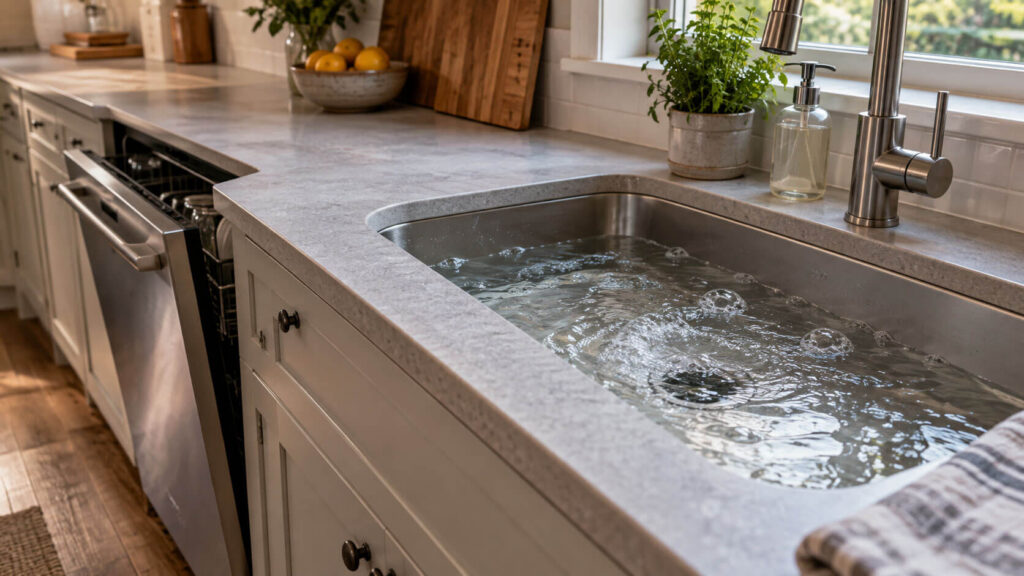
Why a Dishwasher Makes Your Kitchen Sink Gurgle — and When It’s More Than a Clog
That odd gurgling sound after the dishwasher runs is easy to shrug off. The cycle finishes, the water drains, and everything seems fine—until the sink starts bubbling like it’s trying to tell you something. In a lot of homes, that noise is the first clue that the kitchen drain line is struggling, not just the dishwasher.
What catches homeowners off guard is how often the real issue is hidden a few feet away from the appliance itself. A dishwasher can be innocent. The gurgle may be coming from a partially blocked sink branch, a venting problem, or a drain line that’s just beginning to slow down. If you’re trying to separate a harmless nuisance from a real plumbing issue, it helps to think like a contractor would: diagnose the system, not just the symptom.
In older homes around the Hudson Valley, that distinction matters. You’ll see mature trees sending roots into buried lines, older cast-iron or galvanized piping narrowing with buildup, and kitchen drains that were never designed for the way families use appliances today. If you’re already noticing slow drainage, the issue may be bigger than the dishwasher itself. It’s worth understanding a slow sink may point to a deeper plumbing problem before the next backup catches you by surprise.
What the gurgling actually means
Gurgling is usually air trying to move through a drain line that isn’t flowing freely. Water is being pushed through, but not cleanly enough to keep pressure balanced. That’s why you hear bubbling in the sink or sometimes see a little movement in standing water after the dishwasher drains.
In practical terms, three things usually get checked first:
- a partial clog in the sink branch or trap
- a venting issue that prevents air from entering the line properly
- a dishwasher drain hose problem, including a bad high loop or improper connection
Contractors tend to look at the simplest mechanical causes first because that’s where the majority of kitchen drainage complaints come from. But a quick fix isn’t always the right fix. Clearing the visible trap may buy time, yet if the line farther down is scaled up or sagging, the symptom comes back.
That’s why a gurgle after dishwasher use should be treated as a warning sign, not just a weird sound. It often means the system is already working harder than it should.
The mistake homeowners make most often
The most common misread is assuming the dishwasher is “backing up” when the real restriction is in the sink drain. That assumption leads people to clean the appliance filter, run a chemical drain product, and hope for the best. Sometimes that helps for a week. More often, it does nothing useful—or worse, it masks a bigger issue until the line clogs more completely.
Another mistake is treating the problem as purely cosmetic because the sink still drains eventually. Slow, noisy drainage can linger for months before it becomes an obvious backup. By then, grease, soap residue, food particles, and fine debris may have narrowed the line enough that a routine sink load triggers a mess.
What contractors often discover is that the gurgle is the first audible clue of a system that has already been slowing down quietly for a while. In that sense, the noise is useful. It’s telling you to intervene before the problem becomes a standing-water situation or an appliance backup.
Why this happens so often in Hudson Valley kitchens
Kitchen drains in the Hudson Valley have their own personality. Older houses in Dutchess, Putnam, and Westchester often have additions, renovations, and patched-in plumbing from different eras. That can create odd drain runs, long horizontal lines, or venting that was good enough decades ago but not ideal now.
Wooded lots and seasonal weather also play a role. Freeze/thaw cycles can shift older plumbing. Detached garages, basement kitchens, and remodels in additions sometimes tie into older drain systems in ways that aren’t immediately obvious. In homes with septic systems, the kitchen line may also be more sensitive to buildup if the system hasn’t been maintained well.
Even when the dishwasher itself is modern, the drain path it relies on may not be. That’s why the most reliable diagnosis starts with the whole line, not just the appliance. If you’re comparing service options, it helps to know whether you need professional plumbing services that can trace the problem beyond the sink cabinet.
What to look for before the problem gets worse
A gurgle is one thing. A gurgle plus any of the signs below deserves more attention:
- water sitting in the sink after the dishwasher drains
- the sink draining slowly even when the dishwasher is off
- a sewer or musty smell from the drain
- bubbling in a nearby sink or fixture
- dishwasher cycles that leave cloudy water behind
- occasional backup into the sink when the garbage disposal runs
One counterintuitive detail: the stain or odor often shows up in the kitchen, but the actual restriction may be farther down the line. The problem is not always right where the symptom appears. That’s especially true in houses where the sink drain, dishwasher connection, and venting were modified during separate renovations.
If you’re hearing the sound only during dishwasher discharge, the system may be marginal. If it happens during normal sink use too, the issue is moving into “get it inspected” territory.
Why DIY fixes can make the situation messier
There’s nothing wrong with checking the obvious stuff. Cleaning the dishwasher filter, confirming the drain hose isn’t kinked, and making sure the high loop is installed correctly are all reasonable first steps. But once people start forcing chemical cleaners down the line or disassembling plumbing they don’t fully understand, they often create a second problem.
Kitchen drain clogs are rarely solved by harsh chemicals, especially if grease is involved. Those products can fail on partial restrictions, and they’re not a great answer for older piping, rubber gaskets, or mixed-material systems. In a lot of homes, the line needs to be physically assessed and cleaned, not “burned through.”
If the gurgling is paired with recurring slow drainage, a better next step is to investigate the drain path, not keep hoping the issue disappears. In some cases, a service visit focused on when appliance drainage causes backups is the smarter move than another round of temporary fixes.
What contractors usually inspect first
A good plumbing contractor typically starts with the cheapest explanations that can still cause the problem. That usually means:
1. The dishwasher drain connection
They’ll check whether the appliance is tied into the sink drain correctly and whether the hose routing is creating problems. A bad connection can let water back up toward the sink or create air movement that sounds like a clog.
2. The P-trap and branch line
This is where grease, food debris, and soap scum often build up. If the kitchen sink sees heavy daily use, the trap and first section of line are common trouble spots.
3. The venting
Without proper venting, the drain can’t move water cleanly. Instead, air gets trapped and displaced in ugly, noisy ways. A vent issue can mimic a clog, which is why homeowners often misdiagnose it.
4. The main drain run
If the first few feet look fine, the issue may be farther down the line. That’s especially important in older homes where the kitchen branch may have settled, narrowed, or accumulated years of buildup.
Sometimes the real answer is simple drain cleaning. Other times, the contractor finds a deeper issue that needs a more targeted repair. If that’s the case, it helps to understand what drain cleaning may cost in Dutchess County so the conversation feels less like a surprise.
When the issue is more than a nuisance
Not every gurgle means an urgent problem, but some situations should move up the priority list. If the sink is backing up during normal use, if multiple fixtures are affected, or if the smell is getting stronger, the line may be nearing full blockage. At that point, the risk is not just inconvenience. It’s water damage, cabinet damage, and contamination from wastewater.
That matters in kitchens because small leaks are easy to ignore until the base cabinet swells, the floor darkens, or the dishwasher starts leaving water where it shouldn’t. Once moisture gets into cabinet panels or subflooring, the repair bill can climb quickly.
Homeowners sometimes wait because the sink still “mostly works.” That’s understandable, but it’s also how a manageable drain issue turns into a no-drain day with a second problem attached.
What to do next if you’re hearing the gurgle
Start with the basic checks:
- run the dishwasher and watch whether the sink bubbles or rises
- check under the sink for a sagging hose, loose fitting, or obvious leak
- notice whether the sink is already slow even before the dishwasher runs
- listen for the same sound in nearby fixtures
If the noise is isolated and everything else drains normally, you may be dealing with a minor venting or connection issue. If the sink is slow, smelly, or backing up, it’s time for a closer look from a plumber who can trace the whole system.
For homeowners in nearby counties, that may mean comparing Putnam County plumbing services or Westchester County plumber options depending on where the home is located and how quickly the issue is escalating.
A careful diagnosis saves money here. The wrong repair is often the expensive one.
Frequently Asked Questions
Why does my sink gurgle only when the dishwasher drains?
That usually points to a drain restriction or venting issue somewhere in the kitchen plumbing. The dishwasher may be exposing a problem that already exists in the sink line.
Is a gurgling sink always a clog?
No. It can also mean poor venting, a bad dishwasher drain connection, or a line that’s partially restricted rather than fully blocked.
Can I just use drain cleaner?
You can, but it’s rarely the best first move. Chemical cleaners often provide only temporary relief and can be rough on older plumbing.
Should I be worried if the sink still drains eventually?
Yes, if the gurgling keeps coming back. Slow drainage and bubbling are often early warning signs that the line is narrowing.
Will the dishwasher be damaged by this?
It can be, especially if water starts backing up into the appliance or the drain cycle is working against a partial blockage.
When should I call a plumber?
If the sink is slow, smells bad, backs up, or the gurgling is becoming more frequent, it’s time to get the drain inspected before the problem worsens.
If the sound keeps coming back, don’t wait for the sink to stop draining completely. A thoughtful plumbing inspection now is usually less disruptive than dealing with an emergency backup later, and it helps you avoid paying for the same problem twice.
