

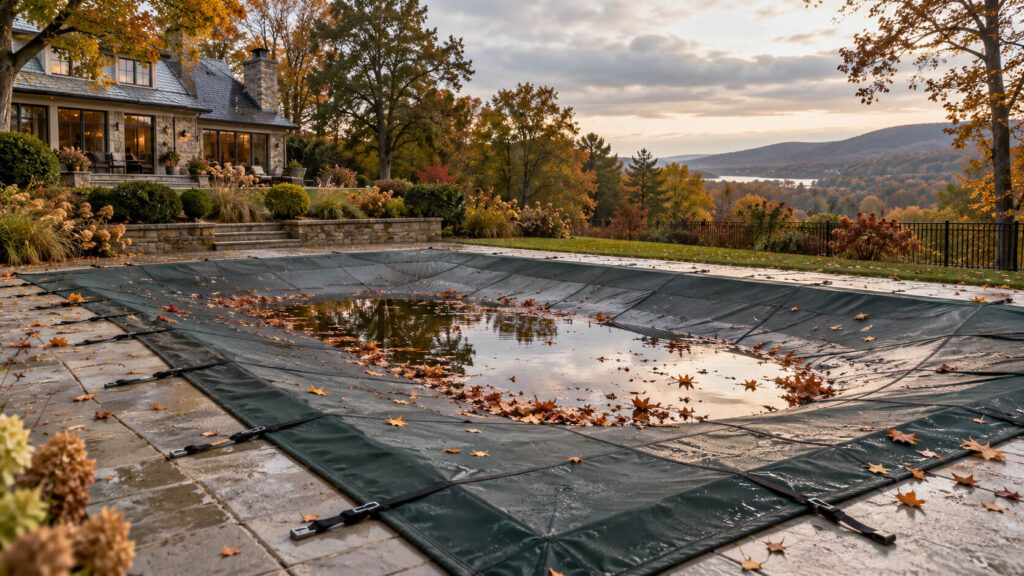
When a pool cover starts sagging after a heavy Hudson Valley rain, it is rarely just an eyesore. It is usually the first visible sign that water, debris, or winter cover tension is not being managed the way it should be. And once that cover is holding a few inches of water, homeowners can get into trouble fast by assuming it is “just weather” and waiting it out.
That kind of delay is where small seasonal issues turn into expensive cleanup. A stressed cover can strain anchors, pull at the pool edge, let in runoff, and hide problems that would be much cheaper to catch early. If you are already noticing standing water, slipping edges, or a cover that seems to have stretched overnight, it may be worth connecting with pool services contractors in Dutchess County before the situation gets heavier than the cover can handle.
In this region, the problem is not always the cover itself. Freeze-thaw cycles, leaf buildup, late-season rainstorms, and poor drainage around the pool area can all work together. A cover that looked fine in November can start behaving very differently by February or March, especially if the property has mature trees, a sloped yard, or runoff that funnels toward the pool pad.
Why a Pool Cover Sags in the First Place
Most homeowners think in terms of “the cover failed,” but contractors usually look deeper than that. Sagging typically starts because water is pooling on top of the cover, the cover has relaxed over time, or the support system beneath it is not doing enough to shed weight.
In practical terms, that means one of three things is usually happening:
- The cover is retaining rain or snowmelt instead of shedding it.
- The spring or strap tension has loosened, stretched, or shifted.
- There is enough debris, water, or ice load that the cover is no longer spanning properly.
What surprises a lot of homeowners is that the visible sag is often not the real issue. The cover is merely the warning sign. The actual problem may be drainage, a failing anchor, damaged hardware, or a pool that was not closed quite right in the first place.
The Hidden Risk Homeowners Miss
Here is the counterintuitive part: the worst damage is not always caused by the weight sitting on the cover. It is often caused by what that weight changes around the edges. Water pressure can shift where the cover sits, loosen the seal, and let dirty runoff move into places it should not be. Once that happens, you are not just dealing with a cover problem anymore. You may also be dealing with contaminated water, a strained liner, or spring opening problems that take more time to sort out.
That is why sagging covers deserve attention even when they do not look dramatic. A slight dip can hide a much bigger issue underneath, especially on older pools or properties that were winterized in a rush. If the pool has been closed for a long time or the cover has been neglected, the situation can point to broader maintenance issues, including hidden damage from leaving a pool closed too long.
What Contractors Usually Check First
When a homeowner calls about a sagging cover, a good contractor does not start by guessing. They usually inspect the same few things first because those are the places where failure tends to begin.
Drainage around the pool
Water needs somewhere to go. If the yard, patio, or grading around the pool pushes runoff toward the cover, the problem will keep returning no matter how often the surface is cleared.
Cover condition and tension
Contractors look for stretching, tears, worn seams, weak attachment points, and areas where the cover has lost its shape. Once a cover starts to relax unevenly, it rarely self-corrects.
Anchor and hardware integrity
Loose anchors, corroded parts, or shifting hardware can make a cover look like it has “lost tension” when the real issue is mechanical wear. This is common on older installations that have already been through several winters.
Debris load
Leaves, waterlogged branches, and settled dirt all add weight. In wooded Hudson Valley settings, especially on lots with mature trees, that buildup can happen faster than people expect.
Why the Problem Gets Worse in Hudson Valley Weather
Rain is only part of the story. The local combination of snow, freeze-thaw movement, cold nights, and spring thaws can turn minor drainage problems into repeated cover stress. Water that pools on top of a cover can freeze, expand, and put even more strain on weak points. Then it thaws, settles, and does it again.
That cycle is rough on older pool systems and even rougher on homes where the pool area was installed years ago and never fully updated. The pool might be perfectly usable, but the cover system may be operating with worn hardware, tired material, or a setup that no longer matches how the property drains now.
If you are comparing service options or looking for broader maintenance help, it is often smarter to start with professional pool services than to treat the cover as an isolated part. The cover, water balance, opening schedule, and seasonal maintenance all tend to be connected.
Where DIY Fixes Usually Go Wrong
Some homeowners try to “tighten it up” or remove the water in a hurry, which sounds reasonable until the cover shifts, the edge pulls free, or the wrong tool damages the material. A quick patch may buy a few days, but it often misses the real cause.
The most common DIY mistake is focusing on the visible sag while ignoring why it formed. If drainage is pushing water onto the cover, or the anchors have loosened, the problem will come right back. Another common misstep is trying to handle ice or heavy water weight before conditions are safe. That is when people slip, bend hardware, or tear the cover and turn a service issue into a replacement issue.
It is also worth saying that a sagging cover can be a symptom of bigger seasonal mistakes, not just wear and tear. Pools that were opened late, closed improperly, or left with too much debris under the cover often show their problems in the first few wet weeks of the season. That is why some homeowners end up dealing with pool opening problems that show up in spring even when they thought the winter cover was holding up fine.
When Delay Becomes Expensive
Not every sagging cover is an emergency, but waiting too long can quickly make it one. Water sitting on a cover for days or weeks can stretch the material permanently. Debris can stain or contaminate the pool below. Loose edges can let in more runoff. And if the cover is holding enough weight, the strain can damage fittings or accessories that were not designed to carry it.
The bigger financial risk is what comes next. A pool that has accumulated dirty water, algae, or organic debris under the cover often needs more than a simple reopening. Cleaning, balancing, and restoring the water can take significantly longer than homeowners planned. In some cases, the result is a full water-quality issue rather than a cover repair.
If things have already gone from “wet cover” to “mess under the cover,” the next concern is often green pool water after opening, which can turn a seasonal maintenance job into a more involved cleanup.
What a Good Repair Plan Looks Like
A thoughtful repair or service visit should do more than just remove the water and move on. The better approach is to figure out why the sag occurred, whether the cover can still be reliably used, and whether the pool area itself is contributing to the issue.
That may include checking:
- cover tension and wear patterns
- anchor spacing and hardware condition
- drainage around the deck or coping
- water levels under the cover
- debris buildup and signs of contamination
Sometimes the answer is simple maintenance. Other times the cover is only telling you that the pool needs a more complete seasonal reset. The important part is not to treat the symptom as the whole story.
Local Factors That Make a Difference
Homeowners in Dutchess, Putnam, and Westchester counties often deal with the same broad weather patterns, but the site conditions can be very different from house to house. A pool on a wooded lot in Dutchess may collect more leaf matter and pine debris. A property in Putnam with a steeper grade may have runoff issues. A Westchester yard with tighter spacing and older hardscape may trap water differently than a newer suburban build.
That is why local experience matters. Pool work is not just about the pool itself. It is about how the yard drains, how the seasons behave on the property, and how much wear the system has already taken. If you are comparing options across the region, Putnam County pool service pros and pool help in Westchester County can be useful starting points depending on where the home is located.
How Homeowners Can Reduce Repeat Problems
The best prevention is not glamorous, but it works. Keep nearby gutters clear, make sure downspouts are not dumping water toward the pool area, and pay attention to how runoff moves after a heavy rain. A cover can only do so much if the property itself is feeding it water.
It also helps to inspect the cover before major weather shifts rather than after. A small amount of slack is manageable. A heavy sag after rain is a sign that something is already off. Homeowners who wait for obvious failure usually end up spending more than those who respond to the early warning signs.
And if the issue keeps recurring, do not assume the cover is defective just because it is the visible part. A contractor will often find that the real cause is a combination of aging equipment, poor water management, and normal wear that has been ignored for too long.
Frequently Asked Questions
Is a sagging pool cover always a serious problem?
Not always, but it should not be ignored. Even a moderate sag can indicate water buildup, weakened hardware, or poor drainage that will keep causing trouble.
Can I just pump the water off the cover myself?
Sometimes, but only if conditions are safe and the cover is stable. If there is ice, heavy debris, or visible damage, it is easier to make the problem worse.
Why does the cover keep sagging after every rain?
Repeated sagging usually points to drainage issues, loose tension, or a cover that has stretched beyond what it can reliably handle.
Does sagging mean the pool itself is damaged?
Not necessarily, but it can lead to water quality issues, liner stress, or contamination if the problem is left alone too long.
When should I bring in a professional?
If the cover is holding a lot of water, has visible tears, or keeps sagging after cleanup, it is usually time for a professional inspection.
What is the biggest mistake homeowners make?
Assuming the cover is the only issue. In many cases, the real cause is drainage, wear, or neglected seasonal maintenance around the pool.
If your pool cover is starting to sag after rain, the smartest move is usually to get the problem looked at before it becomes a bigger spring repair. A good local contractor can help you sort out whether you are dealing with a simple maintenance issue or a deeper seasonal problem that needs attention.
