

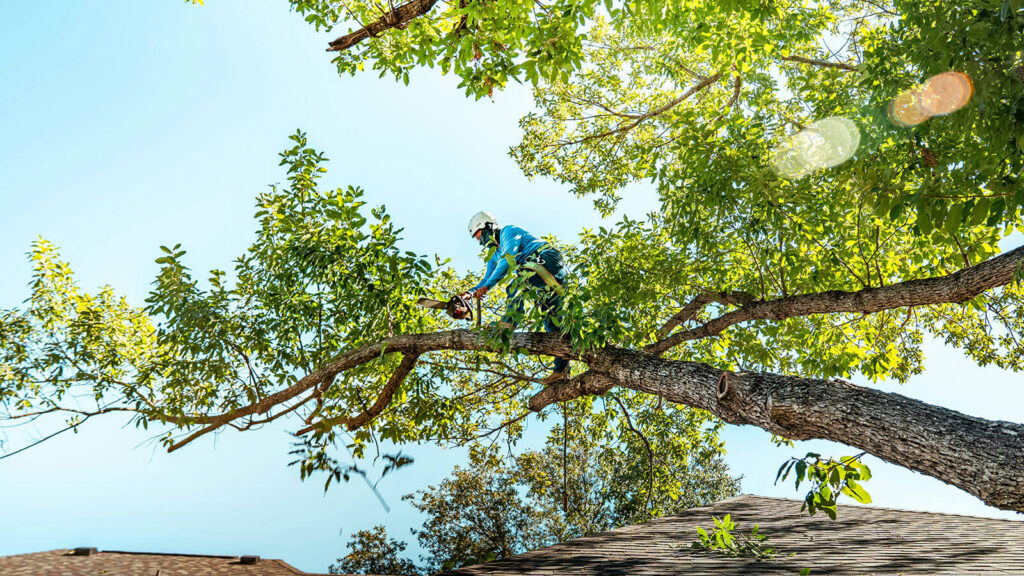
Hudson Valley Tree Trimming Before Storm Season: What Homeowners Should Watch Near Roofs, Siding, and Power Lines
It usually starts as a small nuisance: a branch brushing the roof on a windy night, leaves piling up in gutters a little earlier than last year, or a limb that seems to hang just a little too close to the service drop. By the time a homeowner notices, the tree often isn’t the only issue. Failing branches can damage shingles, split fascia, clog downspouts, and create the kind of moisture problem that shows up later as staining, rot, or a wet basement corner no one connected back to the tree.
That’s why tree trimming is rarely just “yard work.” Around older Hudson Valley homes, it’s often part of basic property protection. Mature trees, steep lots, freeze-thaw weather, and long private driveways all make the consequences of delayed trimming more expensive than they look at first glance. And if the limbs are already close enough to scrape siding or catch on utility lines, the problem is no longer cosmetic.
Homeowners in Dutchess, Putnam, and Westchester counties tend to run into the same pattern every spring: the tree looked manageable in winter, then the first stretch of warm weather brought a surge of growth, and suddenly the branches are back over the roofline. That’s where local tree services contractors become more than a convenience. A good crew doesn’t just cut branches; they look at clearance, canopy balance, deadwood, storm exposure, and whether the tree is actually stressing the structure around it.
Why overhanging limbs become a bigger issue than most homeowners expect
Homeowners often assume the main risk is a dramatic branch break during a storm. That does happen, but in practice, the slower problems cause plenty of damage too. A branch that repeatedly rubs shingles will shorten roof life. A limb hanging over a valley or gutter line can dump debris in one heavy rain and overflow water right where it should be moving away from the house. On older homes, especially those with aging gutters, softened fascia, or original trim details, even light contact can start a repair chain.
What contractors usually notice first is not the branch itself, but the pattern around it: fresh shingle wear, moss growth where shade keeps a section damp, leaf buildup in gutters, or a soffit that has started to sag because water has nowhere to go. The stain on the ceiling often isn’t directly below the actual roof leak, and that’s a useful reminder for homeowners. Water travels. It follows sheathing, framing, and insulation before it finally shows up inside.
That’s one reason trimming should be tied to a wider exterior check, not treated as a standalone chore. After heavy spring weather, it is smart to think about checking siding and gutters after spring storms at the same time. If branches have been moving against the house, there’s a decent chance something else took a hit too.
The places contractors inspect first
Experienced tree crews and exterior contractors usually look in a similar order because the failure points repeat:
- roof edges, especially near valleys and low slopes
- fascia and soffit lines where branches scrape repeatedly
- gutters and downspouts, which often hide the first drainage problem
- clearance around service lines and utility entrances
- deadwood or cracked limbs that may fail under snow or ice
- tree lean, root stability, and signs of stress after wind exposure
That inspection mindset matters because a branch can be “not that close” and still be a problem. A healthy-looking limb that twists in the wind may strike the house more often than a lower branch that sits still. Likewise, a tree on a slope or near a drainage swale can become unstable faster than homeowners expect after a few wet seasons.
In counties with dense spring growth, such as Westchester, the issue is often proximity. In more wooded parts of Dutchess and Putnam, the issue is usually accumulation: multiple trees, multiple rooflines, and a yard that slowly loses daylight and airflow. If you’re comparing options, county-specific crews such as tree services contractors in Dutchess County or Putnam County tree trimming help may be the most practical starting point when the property has more than one problem tree.
Why DIY trimming goes wrong so often
There’s nothing wrong with homeowners cutting a few small limbs off a low ornamental tree. But once branches are near the roof, near power lines, or already stressed by decay, the risk changes quickly. A lot of DIY damage does not happen because people are careless. It happens because they underestimate how much tension a branch is carrying. A cut made in the wrong place can strip bark, tear a section loose, or send the limb swinging back into shingles, windows, or a fence.
The other common mistake is overcutting. People see an overgrown tree and try to “fix it” in one afternoon. That shortcut usually creates uneven weight distribution, which can make the tree more vulnerable in the next wind event. Good trimming is selective. It removes what is dead, unsafe, or structurally problematic. It does not just make the tree look smaller.
This is where internet advice can be misleading for older Hudson Valley properties. A younger suburban tree on a flat lot behaves differently than a mature maple or oak near a stone foundation, a detached garage, or a sloped driveway. The tree may also be sitting in compacted soil from years of freeze-thaw movement and runoff. What looks like a simple cut can actually expose a bigger stability problem.
Storm timing matters more than most people think
One counterintuitive thing homeowners often miss: the best time to deal with risky branches is usually before the tree is actively shedding leaves and catching wind. Once spring growth is underway, canopies become heavier and more exposed. Add a heavy rain or one late-season gust, and branches that looked stable in March can start stressing the exact areas that were already weak.
That’s why spring cleanup is more useful than waiting for visible damage. If a tree came through winter with split limbs, ice damage, or crown dieback, it’s worth looking at spring tree cleanup after winter damage before the next stretch of wet weather. By then, the issue is no longer just cleanup. It becomes prevention.
Contractors tend to think in terms of escalation. A branch that is rubbing a roof today may lead to repeated shingle wear, then water intrusion, then interior staining, then repair of trim and insulation. None of that sounds dramatic in the moment. That’s exactly why it gets expensive.
Signs the tree is no longer just a trimming job
Some situations are beyond routine pruning and need a closer look from a qualified tree professional. That includes visible rot at the base, large dead limbs in the upper canopy, mushroom growth around the trunk, cracks where major limbs attach, or a lean that has changed recently. If roots are lifting soil, if the ground around the tree is heaving after storms, or if the canopy is thinning unevenly, there may be a bigger structural issue under the surface.
Another red flag is repeated damage in the same spot. If a branch keeps failing in the same storm season, the answer may not be “trim it again next year.” It may be that the tree’s structure is compromised, the site is too exposed, or the canopy should be reduced more strategically. Good contractors look at whether the tree can be made safe without creating a different problem.
Homeowners sometimes push for the lightest possible pruning because they want the tree to “stay full.” That instinct is understandable, but it can backfire. A tree left too dense can catch more wind, hold more moisture, and shed heavier limbs under snow. In the Hudson Valley, where winter storms, wet spring soil, and summer thunderstorms all have their turn, a little restraint in the right places usually protects the property better than a cosmetic trim.
What happens when trimming gets delayed
Delaying trimming rarely saves money. It just shifts the repair from a managed job to an emergency. Once a limb is pressing on shingles or a line is involved, the work becomes more complicated and sometimes more expensive because access, safety, and cleanup all get harder at once. Emergency response also tends to create secondary issues: broken gutters, cracked downspouts, torn siding, damaged screens, and in some cases hidden roof damage that homeowners don’t discover until the next rain.
In neighborhoods with older homes, another issue is the chain reaction around moisture. Overhanging branches keep sections of roof and siding damp for longer. That can accelerate paint failure, rot on trim, and growth in gutters. If water is already collecting around the foundation, tree cover can make the area dry unevenly and complicate drainage. It all connects.
That is why homeowners should think about tree trimming as part of the same maintenance picture as drainage, exterior inspections, and seasonal cleanup. If one problem is present, the next one is often close behind.
What a sensible next step looks like
If a branch is touching the roof, crossing a power line, or hanging over a spot where wind clearly moves it into the house, don’t wait for the next storm. If the issue is more moderate, start with a visual walkaround from the ground after a windy day. Look for rubbing marks, hanging deadwood, and debris patterns in gutters or along the roof edge. If the tree is large, mature, or difficult to access, bring in a professional rather than trying to solve it with a ladder and a saw.
For homeowners trying to decide between trimming, pruning, or removal, the right answer usually depends on tree health, location, and what the tree is threatening. A decent contractor will explain the tradeoff clearly instead of pushing the most aggressive option. If you want a local place to start, tree service pros in Westchester County can be a useful option for properties where clearance, visibility, and neighbor proximity matter just as much as the tree itself.
And if the concern is broader than one branch, it may be worth comparing tree work with other exterior maintenance at the same time. Sometimes the most efficient approach is to handle a trimming issue, inspect the gutters, and check the siding in one visit rather than chasing separate problems over several weeks.
Frequently Asked Questions
How close is too close for a branch near the roof?
If the branch can touch the roof in wind, it is too close. Even a branch that sits a little above the roofline can become a problem once leaves fill in and the tree starts moving in a storm.
Should tree trimming be done every year?
Not always. It depends on the species, age, and location of the tree. Fast-growing trees near the house may need more frequent attention, while healthier, well-spaced trees can go longer between prunings.
Is winter or spring better for trimming?
It depends on the goal. Dormant-season trimming can work well for many trees, but spring is often when homeowners first notice storm damage, deadwood, or clearance issues that need immediate attention.
Can overhanging trees really affect gutters?
Yes. Leaves, seed pods, twigs, and bark fragments all end up in gutters. The bigger issue is often not the clog itself, but the overflow and rot that follow when water has nowhere to go.
When should a homeowner call a professional instead of handling it alone?
Anytime the work involves power lines, a tall ladder, large limbs, or signs of tree decay. If the branch could damage the roof or swing unpredictably after cutting, it is usually not a DIY job.
What’s the biggest mistake people make with tree trimming?
Waiting until the tree is already causing damage. The second biggest mistake is overcutting just to make the tree look neat, which can weaken it and create a bigger issue later.
For Hudson Valley homeowners, the safest path is usually the practical one: address risky branches early, get a clear opinion on tree health, and make sure the rest of the exterior gets checked while you’re at it. A little informed maintenance now can prevent a much more expensive repair season later.