

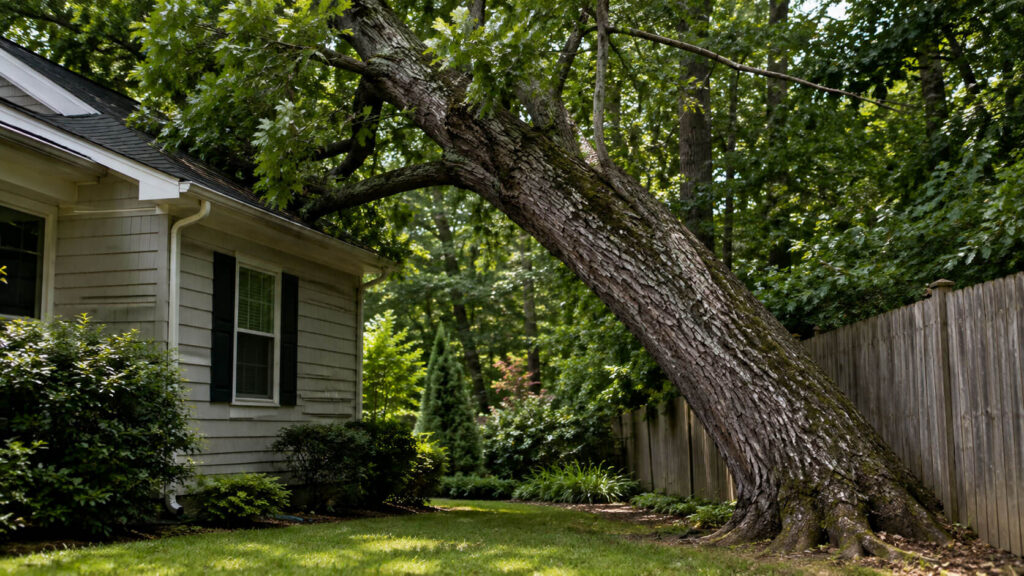
When a tree starts leaning toward a house, a driveway, or a neighbor’s fence, the problem is usually bigger than “just trim it back.” In the Hudson Valley, where mature trees, steep grades, and older property lines often meet at awkward angles, tree work can turn into a dispute faster than most homeowners expect. What looks like routine maintenance can quickly become a question of liability, access, insurance, and who is actually responsible for what.
That’s why property-line tree issues deserve more attention than they usually get. The expensive mistake is not always the tree itself. It’s assuming everyone sees the problem the same way, or assuming a quick cut will solve a long-term issue. The way the tree is handled, who does the work, and how the boundary is documented can matter almost as much as the trimming plan.
Why property-line tree issues get messy so quickly
A boundary tree seems straightforward until someone notices branches overhanging a roof, roots pushing near a driveway, or limbs brushing a utility line. Then the conversation shifts from maintenance to responsibility. In practice, contractors usually care about a few things first: where the trunk is actually located, whether the work could affect the neighbor’s side, and whether access for equipment will damage lawns, fencing, or stone walls.
That last point matters more in the Hudson Valley than people think. Narrow lots in Westchester, wooded setbacks in Putnam, and long driveways in Dutchess all create different access problems. A tree crew may be physically able to do the work, but that doesn’t mean the property can handle a bucket truck, stump grinder, or falling debris without collateral damage.
Homeowners also tend to underestimate how often tree disputes begin with a maintenance issue, not a legal one. A branch rubbing siding, a limb dropping on a garage roof, or a dead trunk leaning after a storm can create urgency quickly. If the issue is already close to a home, it may be worth reviewing tree trimming near the house before trying to improvise a fix.
What experienced contractors usually inspect first
Before anyone talks about cutting, a good crew will usually look at the tree’s condition, not just its location. Is it healthy, hollow, storm-damaged, leaning because of soil movement, or stressed by root disturbance? A tree that appears stable from the road may be failing from the inside, especially if the property has wet ground, compacted soil, or old drainage problems.
Contractors also pay attention to the canopy. Heavy limbs growing toward a house can create risk even if the trunk is still sound. The goal is not just to “take some weight off.” It is to reduce the chance of failure in a way that doesn’t leave the tree unstable or create a bigger pruning problem later. Cheap, aggressive cutting often weakens a tree and can lead to faster decline.
That is one reason homeowners should be cautious about bargain pricing. The risks of hiring the cheapest tree crew are often hidden until something goes wrong: poor cleanup, bad cuts, skipped safety steps, or a job that looks fine for two months and then declines. With trees near property lines, a low quote can become a high-cost problem very quickly.
The counterintuitive part most homeowners miss
The obvious assumption is that the tree closest to the damage is the one causing the issue. That is not always true. In many drainage and storm cases, the real pressure comes from somewhere else: roots redirecting water, a hidden lean in the trunk, or a canopy that catches wind from a different direction than the homeowner noticed. The problem tree is not always the one touching the fence.
That’s especially relevant after wet seasons and freeze-thaw swings. Soil movement can change the way roots hold, and heavy rain can expose a weakness that was already there. A tree that looked harmless in July may suddenly become the thing that drops a limb in March. If the concern is seasonal, especially before storm season, it may help to look at Hudson Valley tree trimming before storm season as part of the broader property plan.
When a DIY approach starts to get risky
Small pruning on a low branch is one thing. Cutting near a boundary, a roofline, a garage, or utility service is something else entirely. Once a homeowner is trying to manage branch direction, avoid a neighbor’s yard, or protect overhead lines, the margin for error gets thin. A cut in the wrong place can trigger splintering, create a fall path you didn’t expect, or leave the tree unbalanced.
There is also the liability side. If a homeowner cuts a tree that straddles a boundary without understanding ownership or local rules, the disagreement may not end with the tree. It may affect insurance questions, neighbor relations, and responsibility for cleanup or damage. That’s why many property-line jobs are better handled by professional tree services contractors who can assess access, hazard level, and whether the job needs specialized equipment.
In denser neighborhoods, especially where houses sit close together, the same issue can look different from one county to the next. If you’re dealing with a boundary tree in a built-up area, Westchester County tree contractors often have to work around tight setbacks, shared fences, and limited staging space. In more wooded parts of the region, the challenge is often less about space and more about unstable ground, fallen debris, and long-term maintenance access.
How disputes usually escalate
Most tree disputes do not begin with formal conflict. They begin with an unanswered text, a rough estimate, or one side trimming what the other side thought was protected. The escalation usually happens after the tree work has already started or after a storm exposes an unresolved problem.
Contractors often see the same pattern: a homeowner waits too long, then wants the work done immediately, and the urgency leaves no room for a proper conversation with neighbors or a careful scope. That is where shortcuts fail. A rushed cut may solve one branch issue and create three new ones, especially if the work was done without checking property lines, overhead hazards, or the tree’s structural balance.
If the tree is part of a larger property issue, the conversation should widen. A leaning tree, repeated washout, or a recurring drainage problem may need more than trimming. In those cases, homeowners sometimes discover the tree is reacting to moisture, grading, or even a failing root zone. The visible symptom is not always the root cause.
What a smart next step looks like
Start with documentation. Photos from both sides of the property, a clear look at the trunk base, and a note about when the problem became noticeable can save a lot of confusion later. If the tree is close to a structure, take note of roof overhangs, gutters, power service, and any visible cracks or movement in nearby fencing or hardscape.
Then get the right kind of assessment. Not every tree issue needs removal, but not every tree can be safely saved with pruning either. The right recommendation depends on condition, species, location, and what the tree is actually doing to the property. A contractor who only wants to sell a full removal is not necessarily the right fit. Neither is someone who treats a compromised tree like a simple trim job.
For homeowners in wooded areas, shared driveways, or lots with mature trees, it can also be helpful to think beyond the immediate branch work. In places like Dutchess and Putnam, tree decisions often connect to drainage, driveway edges, and seasonal cleanup. If the concern spans a larger lot or multiple trees, tree services contractors in Dutchess County and Putnam County tree service help can be useful starting points for finding the right kind of local support.
How to keep a small disagreement from becoming an expensive one
The best outcomes usually come from slowing the problem down a little before the tree starts coming down. That means confirming which side of the line the trunk sits on, deciding whether the work affects shared access, and making sure the crew understands exactly what needs to be preserved. It also means being wary of anyone who offers a quick fix without asking about the neighbor side, utility clearance, or how debris will be handled.
In practical terms, the safest tree jobs are rarely the cheapest ones, but they also do not have to be the most expensive if they are scoped correctly. The point is to avoid rework, property damage, and neighbor friction. A tree that is trimmed carefully once is usually a better investment than one that gets cut hard, regrows badly, and needs another crew back in a year.
For homeowners who want to be proactive instead of reactive, seasonal planning helps. If a tree is already questionable before heavy winds, snow load, or saturated soil conditions, it is worth addressing before the next storm does the deciding.
Frequently Asked Questions
Who is responsible for a tree on a property line?
It depends on where the trunk is located and what local rules apply. If the trunk sits on the boundary, both owners may have an interest in it. If it clearly sits on one side, that owner is usually responsible, though branches extending over the line can still create complications.
Can a neighbor trim branches that hang over their property?
Often yes, but only up to the property line and only in a way that does not kill or destabilize the tree. Cutting too aggressively can create damage, and disputes often start when one side trims without understanding the long-term effect on the tree.
Is removal always better than pruning?
No. A healthy tree with selective trimming may be worth preserving, especially if it provides shade or privacy. But a structurally compromised tree, a hollow trunk, or repeated storm failure can make removal the safer option.
Why do tree jobs cost more when they are near a house?
Because the risk changes. Crews may need rope rigging, specialty equipment, tighter cleanup, or more careful staging to avoid damage to siding, roofs, fences, vehicles, and landscaping.
What’s the biggest mistake homeowners make with boundary trees?
Waiting until the tree becomes an emergency. Once branches are over a roof or a storm weakens the trunk, the options narrow and the cost usually goes up.
When should I bring in a professional instead of handling it myself?
Any time the tree is large, leaning, near power lines, close to a structure, or involved in a property-line disagreement. Those are the jobs where a careful assessment matters more than a fast cut.
If a boundary tree is becoming a source of stress, the safest move is usually to get informed before someone grabs a saw. A thoughtful assessment from a trusted local tree professional can help you avoid a bad repair, a neighbor dispute, or a much larger bill after the next storm.